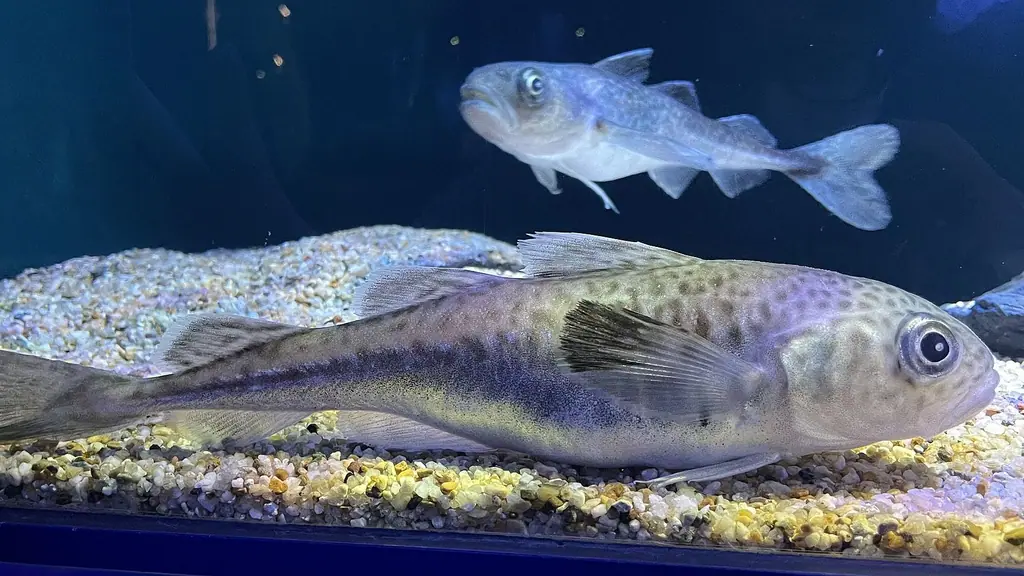
Lower a camera beneath the drifting ice north of Svalbard in late summer and you may see them: small, slender fish hovering in the cracks and crevices of the ice underside, often no longer than a hand. They are polar cod, Boreogadus saida. On their own they look unremarkable. Taken together they form one of the most important links in the Arctic marine food web.
A review of Russian and Western literature published in 2021 describes polar cod as the most abundant plankton-eating fish in the Arctic, with a high fat content that makes it a key channel for passing energy from tiny zooplankton up to larger fish, seabirds and marine mammals (Aune et al. 2021). North American agencies usually call the same species Arctic cod.
This article follows polar cod through its life cycle, explains why so many predators rely on it, and looks at what long-running surveys in the Barents Sea have recorded as the sea ice retreats.
A fish built for freezing water
Polar cod has a circumpolar distribution and is regularly found in ice-covered waters. According to Store norske leksikon, adults usually reach about 25 cm and rarely exceed 40 cm or seven years of age; the species lives mainly between the surface and about 400 m, most often in water colder than 0 °C, and is closely tied to areas near the ice edge and north of the Polar Front, the boundary where warm Atlantic water meets cold Arctic water (SNL).
Living in water that can be colder than the freezing point of fish blood requires chemistry as well as behaviour. Polar cod produce antifreeze glycoproteins, molecules that bind to tiny ice crystals and stop them growing, which keeps body fluids from freezing below 0 °C.
The review by Aune and colleagues gives a fuller picture of growth. One-year-old fish are normally 8–9 cm long and grow by about 3–4 cm a year for the next two or three years. Most fish live five or six years, although individuals of 8–10 years are occasionally found. In joint Norwegian–Russian trawl surveys in autumn 2004–2009 the mean length was only 11.5 cm. In the eastern Barents Sea some fish mature at 8 cm, half are mature at 13–14 cm, and all fish longer than 22 cm are mature.
Spawning in the dark, eggs under the ice
Polar cod spawn in winter. In the Barents Sea the first spawning fish are often recorded in mid-December, with the most intense spawning in January and February, although timing varies from year to year with temperature and ice conditions. Most spawning is thought to happen under the sea ice or close to its edge, at about 20–60 m depth, in water just above 0 °C (Aune et al. 2021).
The eggs are large, transparent and buoyant, so once fertilised they are assumed to float up to the underside of the ice. There they are shielded from waves and from predators that hunt by sight, in conditions that change little from day to day. Hatching larvae then meet the spring production of ice algae and zooplankton.
The sea ice is not just a roof over polar cod. It is a nursery for its eggs and larvae, a feeding ground and a hiding place. That is why scientists expect the species to be sensitive to the loss of ice, not only to warmer water.
The middle of the food web
Polar cod eat zooplankton and are eaten by almost everything larger. Historical stomach data from the eastern Barents Sea show copepods of the genus Calanus and krill dominating the diet from March to November, with amphipods such as Themisto also important (Aune et al. 2021). Our article on Calanus copepods explains why these lipid-rich crustaceans are such valuable food.
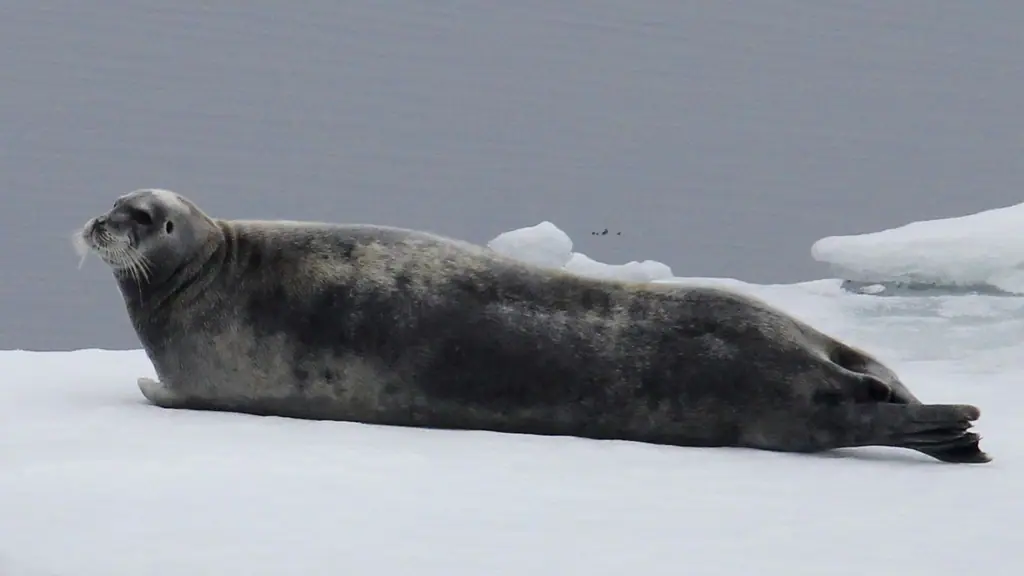
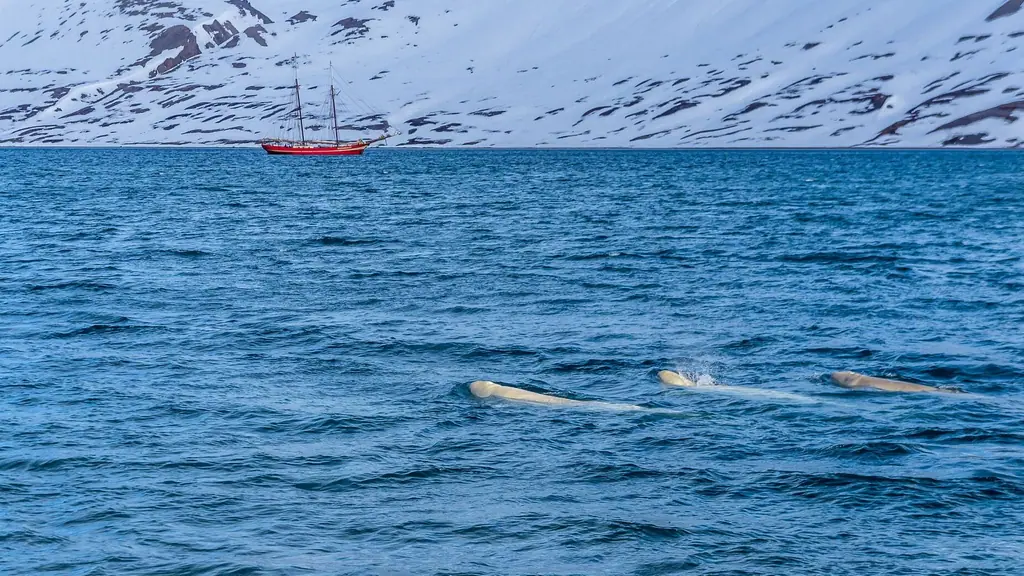
Above polar cod sit Atlantic cod, ringed seals, harp seals, narwhals, belugas and seabirds such as Brünnich's guillemot. The MOSJ monitoring programme for Svalbard notes that polar cod is prey for cod, seabirds and seals, and may be especially important when predator stocks such as cod are large (MOSJ). The profiles in Seals of the Arctic and Arctic Seabirds and a Changing Ocean show how often this one fish turns up in other species' diets.
The Nansen Legacy project, which studied the northern Barents Sea from 2018 to 2024, added a nuance in its final report: polar cod are dietary generalists, eating both Arctic and boreal zooplankton as well as fish, which places them higher in the food web than capelin. The report also notes that polar cod are likely to decline with sea-ice loss and increased predation by Atlantic cod (Nansen Legacy Final Report). Our explainer on the Nansen Legacy project describes that research programme; this site is independent of it.
What the Barents Sea surveys show
The Barents Sea holds one of the largest polar cod stocks in the Arctic. Its biomass has been measured acoustically every autumn since 1986, in recent decades during the joint Norwegian–Russian ecosystem survey, in which echo sounders record fish schools and trawl catches confirm which species the echoes belong to. The Institute of Marine Research then converts the echoes into biomass. The survey has a known blind spot: the northernmost part of the polar cod range is not covered, so the estimate represents only the fish inside the surveyed area in autumn (MOSJ).
Within that limit, the record is striking:
| Observation | Detail | Source |
|---|---|---|
| Long-term pattern | Large fluctuations throughout the 1986–2025 series | MOSJ |
| Since 2012 | Two surges to record highs, each followed by a rapid fall; causes unknown | MOSJ |
| 2024 and 2025 | Biomass about 10% of the long-term average; all age groups below average in 2025 | MOSJ |
| Spawning grounds | South-eastern Barents Sea grounds now used very little; spawning almost exclusively around Svalbard | MOSJ |
| Red List status (Norway) | Near Threatened in 2015; Endangered (EN, criterion A2) in 2021, owing to a population reduction | Artsdatabanken; Store norske leksikon |
Historically, literature describes two main spawning areas, one east of Svalbard and one south-west of Novaya Zemlya (Aune et al. 2021). The apparent shift towards Svalbard matters because larvae hatched in different places drift into different conditions, which affects survival.
Genetics adds another layer. Nansen Legacy researchers found no clear population structure among polar cod in their study area, which they suggest may reflect the way drifting ice connects regions. They did, however, detect large chromosomal inversions whose frequencies hint at hidden sub-populations or ecotypes (Nansen Legacy Final Report).
Why sea-ice loss and warming water matter
Scientists separate several pressures that act at different stages of life:
- Loss of the ice nursery. Model work summarised in the Nansen Legacy report, based on 30 years of survey data, found that the survival of young polar cod is more sensitive to sea ice, while older fish are more sensitive to predation by cod.
- Shrinking cold habitat. Polar cod are adapted to water near freezing point. As Atlantic water spreads further into the Barents Sea, the area of suitable cold water shrinks.
- New neighbours. Boreal species such as Atlantic cod are projected to spawn and feed further north, where they can compete with and eat polar cod.
- Human activity. Less ice opens the region to shipping and other industry. Nansen Legacy experiments, for example, exposed polar cod to crude oil to study effects on reproduction.
Correlation is not proof of cause, and MOSJ is careful to say that the reasons for the recent surges and collapses are unknown. The direction of the expected long-term change, however, is consistent across these studies: less ice and warmer water are likely to mean fewer polar cod in the Barents Sea.
Following the story
The most useful single place to watch is the MOSJ polar cod indicator, which is updated after each autumn survey. When reading a new figure, check three things: which part of the range was covered, whether the number refers to biomass or to abundance at a given age, and how it compares with the long-term average rather than with one exceptional year. For the wider context of how ice-associated food chains work, start with Arctic Food Chains Explained.
Sources
- Biomass of polar cod in the Barents SeaMOSJ – Environmental Monitoring of Svalbard and Jan Mayen (Norwegian Polar Institute / Institute of Marine Research)
- Distribution and ecology of polar cod (Boreogadus saida) in the eastern Barents Sea: a review of historical literature (Aune et al. 2021)Marine Environmental Research
- The ecology of gadid fishes in the circumpolar Arctic with a special emphasis on the polar cod (Mueter et al. 2016)Polar Biology
- The Nansen Legacy Final ReportThe Nansen Legacy Report Series, no. 43 (2025)
- PolartorskStore norske leksikon
- Boreogadus saida (polartorsk): Norsk rødliste for arter 2021Artsdatabanken
Spotted an error? Email contact@nansenlegacy-symposium.com with the page address. See our editorial policy.