Hopen is a long, narrow island off the south-east of Svalbard, and for decades it was one of the places where pregnant polar bears from the Barents Sea dug their winter dens. To get there, a female has to walk across sea ice in autumn. Norway's monitoring programme MOSJ reports that ice days around Hopen have decreased markedly since records began in 1979, that den counts there have declined since the 1990s, and that cubs have not been documented on the island for several years.
The polar bear (Ursus maritimus) is a land mammal by ancestry and a marine mammal by lifestyle. It is built to hunt seals from a floating platform of ice, and almost every feature of its body and behaviour reflects that. Understanding those adaptations explains both how the species thrives in one of Earth's harshest environments and why the loss of sea ice is the main threat it faces.
This article looks at the bear's body, its hunting and energy budget, its breeding cycle, and the current state of its populations.
A body built for cold and water
An adult male polar bear typically weighs about 270–540 kg (600–1,200 lb), and the largest can exceed 770 kg; females weigh about 180–320 kg (400–700 lb), according to the Alaska Department of Fish and Game. Large size is itself an adaptation to cold: a big body has less surface area relative to its volume, so it loses heat more slowly.
The coat has water-repellent outer guard hairs over a dense undercoat, and beneath the skin lies a thick layer of fat. The fat insulates in icy water, where fur loses much of its value, and doubles as an energy store for lean months.
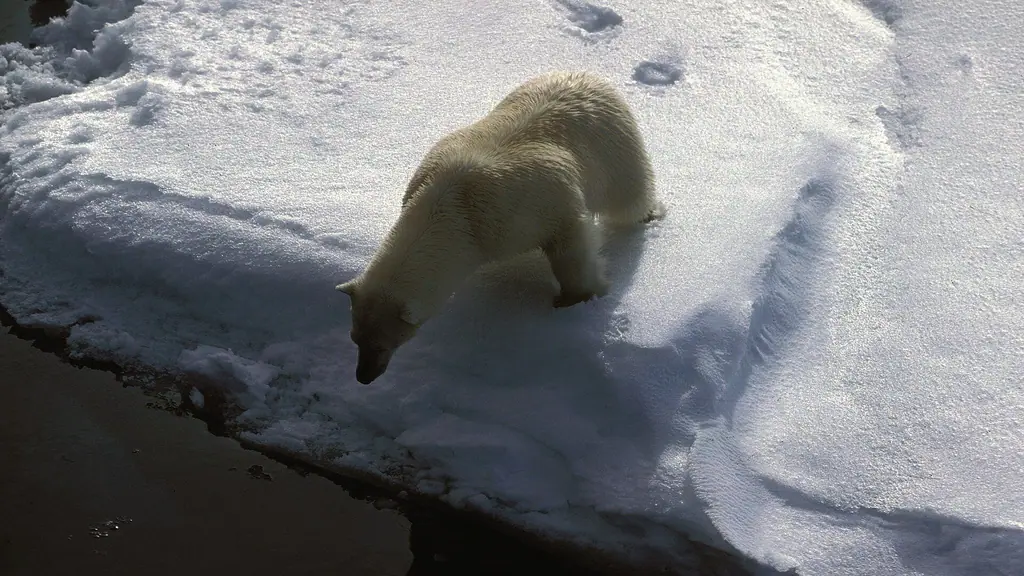
Its feet are large, which spreads its weight on thin ice and makes powerful paddles for swimming. The soles are almost covered in fur, giving insulation and grip on slippery surfaces. Polar bears swim readily between floes, and some individuals cover long distances in open water.
Hunting seals from the ice
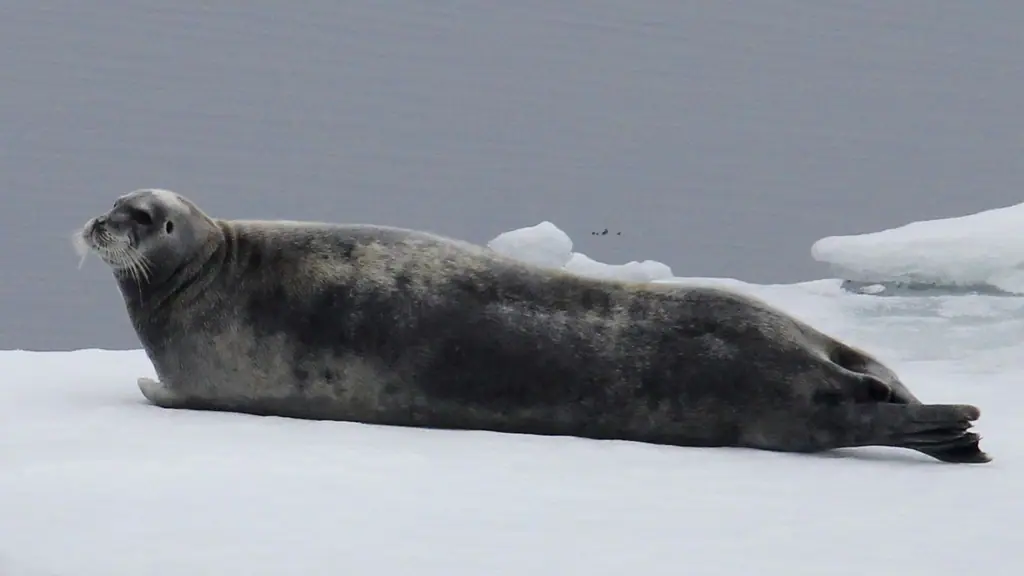
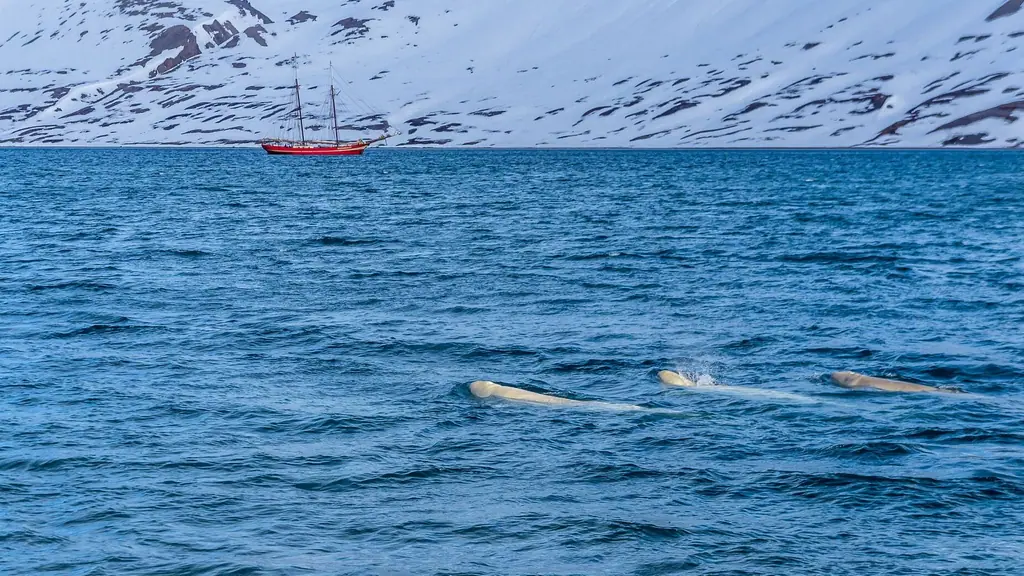
Polar bears depend on sea ice because their prey depends on it. The ringed seal is their main prey, and bearded seals, walruses and beluga whales are also taken. Bears catch seals in three main ways described by the Alaska Department of Fish and Game: waiting beside breathing holes that seals keep open in the ice, stalking seals resting on the ice surface, and breaking into the snow lairs where ringed seals give birth, to catch females or pups.
The first method calls for extraordinary patience. A bear may stand or lie motionless at a breathing hole for a long time, waiting for a seal to surface for air, then strike with its forepaws and jaws. Bears preferentially eat the blubber and skin of their prey, the most energy-dense parts. That makes sense in an ecosystem where energy flows through fat at every level, as described in our article on Arctic food chains.
Spring is a key hunting season: ringed seal pups are born in snow lairs on the ice, and later in the season adult seals haul out on the ice to moult. Without ice, a bear can rarely catch a seal in open water, so the ice-covered season is, in effect, the bear's feeding season.
A high-energy, high-fat lifestyle
Hunting from ice is efficient when it works and costly when it does not. In 2018 Pagano and colleagues measured the energy use, activity, body condition and hunting success of free-ranging bears moving on the spring sea ice. They found field metabolic rates 1.6 times higher than previously assumed, and that low intake of fat-rich prey left more than half of the bears examined in an energy deficit. Movement across the ice strongly influenced energy demands, which suggests that more fragmented, faster-drifting ice could raise the cost of living.
When the sea ice retreats in summer, bears in many regions either follow it north or come ashore and wait. On land they largely fast, living on their fat reserves until the ice returns. In 2020 Molnár and colleagues estimated how many days bears in different subpopulations can fast before cub recruitment and adult survival start to fall sharply, then compared those thresholds with projected ice-free days. Their model suggested that with high greenhouse gas emissions, steeply declining reproduction and survival would jeopardise the persistence of all but a few high-Arctic subpopulations by 2100, and that moderate emissions cuts would prolong persistence but probably not prevent some subpopulations disappearing within this century.
Polar bears do not truly hibernate. Only pregnant females spend the winter in dens; other bears stay active on the ice through the polar night, hunting whenever they can.
Dens, cubs and a slow life history
Polar bears breed slowly. Mating takes place between March and May, but the fertilised egg does not implant until about late September, after which gestation lasts two to three months. Pregnant females dig dens in October and November, often in snow along coastal bluffs, riverbanks or on the sea ice, and give birth in December or January, usually to twins.
The cubs weigh about 0.5–0.9 kg (1–2 lb) at birth. Inside the den they nurse on rich milk and grow fast, reaching about 9–11 kg (20–25 lb) by the time the family emerges in late March or early April. Through all this time the mother eats nothing, so a female must enter the den with substantial fat reserves. Cubs stay with their mother for about two and a half years, and a female typically produces a litter only once every three years. Because each female raises few young in her lifetime, populations recover slowly from losses.
Den sites have to be reachable. In the Barents Sea, MOSJ identifies five main denning areas: Hopen, Kongsøya, Storfjorden, Kvitøya and Nordaustlandet. It reports that the number of days with more than 60% sea ice between 1 October and 31 December has decreased in all five, and that when such days fall below about 30, it becomes hard for pregnant females to reach the more isolated islands in time.
How many polar bears are there?
The IUCN/SSC Polar Bear Specialist Group (PBSG), which advises the five countries party to the 1973 Agreement on the Conservation of Polar Bears (Canada, Greenland, Norway, Russia and the United States), lists 20 subpopulations in its status table, last updated in 2024. The 20th, in south-east Greenland, was described in 2022 by Laidre and colleagues: a genetically distinct group that hunts from freshwater glacial ice where sea ice is scarce. The species is listed as Vulnerable on the IUCN Red List, and the PBSG gives the most recent global estimate as 22,000–31,000 bears, from Regehr and colleagues in 2016.
Trends vary widely, and many are unknown. By our count of the PBSG's 2024 table:
| Short-term trend | Number of subpopulations | Examples |
|---|---|---|
| Declining | 3 | Southern Beaufort Sea, Western Hudson Bay, Davis Strait |
| Likely stable | 5 | Barents Sea, Chukchi Sea, Foxe Basin |
| Increasing | 2 | Kane Basin, M'Clintock Channel |
| Data deficient | 10 | Arctic Basin, Kara Sea, Laptev Sea |
The Barents Sea subpopulation, shared by Norway and Russia, was estimated at 2,644 bears in 2004 (95% confidence interval 1,899–3,592). A survey of the Norwegian part in 2015 found numbers had not changed much. Hunting was banned in 1973 after about a century of harvest, and the population grew in the following decades. MOSJ also reports a surprise: the body condition of adult males in spring, measured since 1993, declined until about 2000 and then improved over the following two decades despite sea-ice loss. Bears appear to have adjusted their behaviour, but researchers caution that this does not mean the population is insulated from further ice decline.
What to watch
Polar bear science relies on long time series: den counts, body condition, survival and cub production, matched against sea-ice records. The most useful indicators to follow are the length of the ice-free season in each region and the PBSG's periodic status updates. To understand the habitat itself, read how Arctic sea ice forms and melts each year, and for the bears' prey, our profile of Arctic seals. More species profiles are collected under Polar Wildlife.
Sources
- Population statusIUCN/SSC Polar Bear Specialist Group
- Polar bear (Barents Sea population)MOSJ – Environmental Monitoring of Svalbard and Jan Mayen (Norwegian Polar Institute)
- Polar bear species profileAlaska Department of Fish and Game
- Fasting season length sets temporal limits for global polar bear persistence (Molnár et al. 2020)Nature Climate Change
- IUCN/SSC Polar Bear Specialist GroupIUCN/SSC Polar Bear Specialist Group
Spotted an error? Email contact@nansenlegacy-symposium.com with the page address. See our editorial policy.