In early April, on the flat fjord ice of Spitsbergen, a ringed seal pup is born out of sight. Its mother has dug a chamber into a snowdrift piled against a lump of glacier ice frozen into the fjord, and the pup spends its first weeks hidden there, sheltered from the wind and from most predators. Above it, the ice looks empty.
That hidden birth captures something true of all Arctic seals: their lives are organised around sea ice. They give birth on it, nurse their pups on it, moult on it and use it as a place to rest between feeding dives. According to the Norwegian Polar Institute, 19 species of marine mammals are found in Svalbard waters, including five species of seals (NPI).
This article profiles four of them, the ringed, bearded, harp and hooded seals, which between them use almost every kind of ice the region offers. (The fifth, the harbour seal, is a coastal species at the northern edge of its range in Svalbard and is less tied to ice.)
Four seals, four ways of using ice
The table compares the four species using figures from NAMMCO, the Norwegian Polar Institute and the MOSJ monitoring programme. Body sizes vary between populations and seasons, so treat them as typical ranges.
| Ringed seal | Bearded seal | Harp seal | Hooded seal | |
|---|---|---|---|---|
| Scientific name | Pusa hispida | Erignathus barbatus | Pagophilus groenlandicus | Cystophora cristata |
| Adult size | 50–100 kg (Svalbard) | 2.1–2.7 m, 200–430 kg | Not given in these sources | Males about 2.5 m and 300 kg; females about 2.2 m and 160 kg |
| Ice used for pupping | Stable fast ice with snowdrifts | Drifting floes over shallow water | Large pack-ice whelping areas | Drifting pack ice in the West Ice |
| Nursing period | Several weeks, in the snow lair | 18–24 days | Not given in these sources | 3–5 days |
| Main food | Polar cod; young eat crustaceans | Bottom-living invertebrates and fish | Prey taken on long foraging trips into the northern Barents Sea | Fish and squid, often from deep water |
| IUCN global status | Least Concern (2016) | Least Concern (2016) | Not covered here | Vulnerable (2016) |
| Norwegian Red List 2021 | Vulnerable | Near Threatened | Not covered here | Endangered |
The ringed seal: master of the fast ice
The ringed seal is the smallest Arctic seal and the most widespread. The Norwegian Polar Institute estimates the Svalbard population at about 100,000 animals and notes that, despite their small size, ringed seals can dive below 500 m (NPI). Worldwide, NAMMCO puts the total at about 3.5 million.
Its great advantage is the ability to live under fast ice, sea ice that is frozen to the coast and does not drift. NAMMCO describes the ringed seal as the only northern seal that regularly maintains breathing holes in ice more than a metre thick, scraping them open with its fore-claws and teeth (NAMMCO). Adults' claws are often worn down by this work.
Pups are born in these snow lairs in early spring. In Svalbard the fast ice is used for pupping in March and April and then as a platform for moulting in June (NPI). During the moult, which peaks in June, ringed seals can spend up to 60% of their time hauled out on the ice and eat very little (NAMMCO).
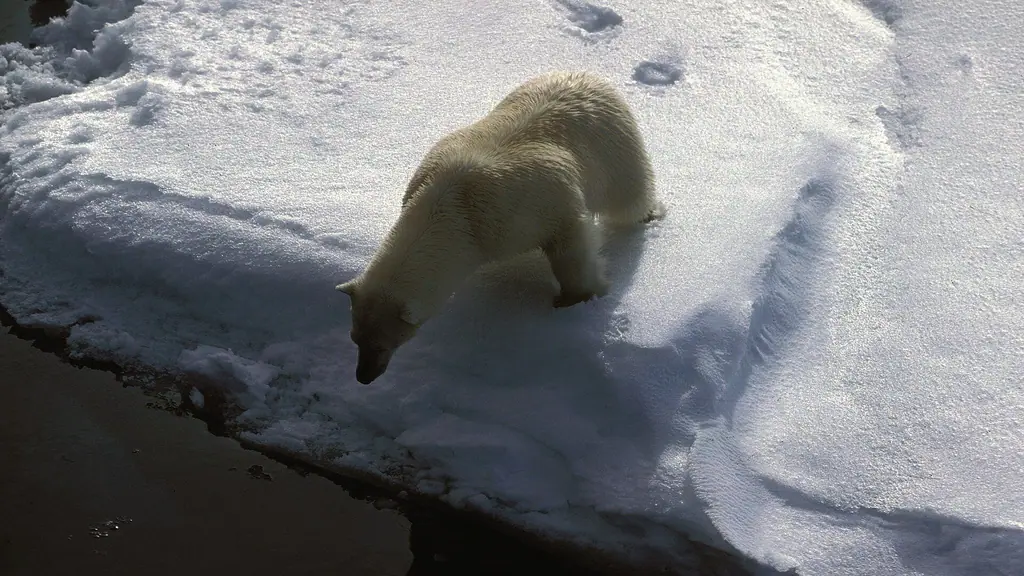
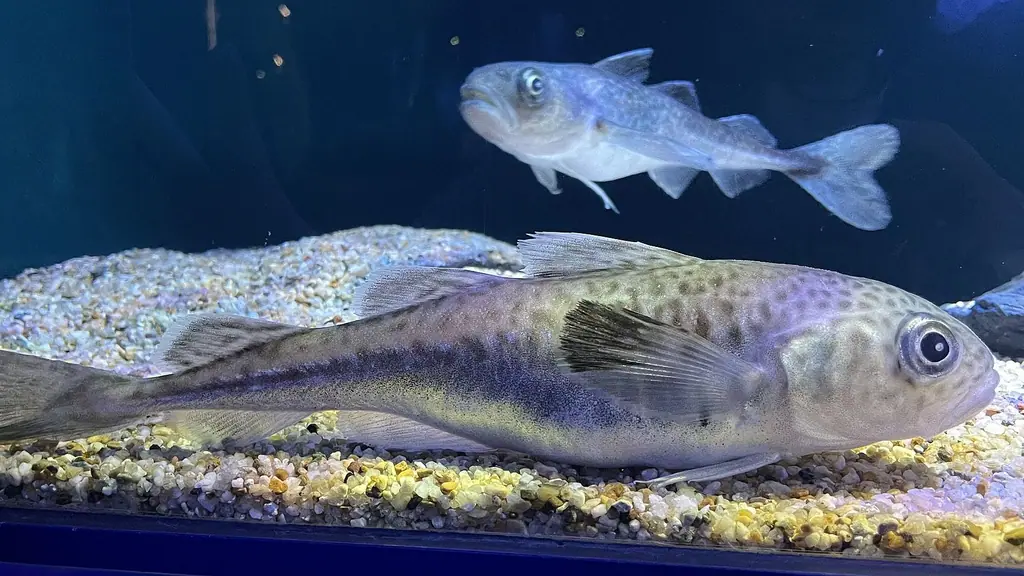
Polar cod is usually the most common prey, and young seals eat more crustaceans such as amphipods, mysids and krill; see our profile of polar cod. Polar bears are by far the most important predator, and the Norwegian Polar Institute describes ringed seals as the nutritional basis for polar bears and Arctic foxes in Svalbard, as our article on how polar bears adapt to the Arctic explains.
For ringed seals, snow matters as much as ice. If too little snow drifts onto the fast ice before pupping, lairs cannot be built and pups are exposed to cold and predators. NAMMCO notes that in winter 2011 and spring 2012 no sea ice formed in most Svalbard fjords.
The bearded seal: a bottom feeder on drifting floes
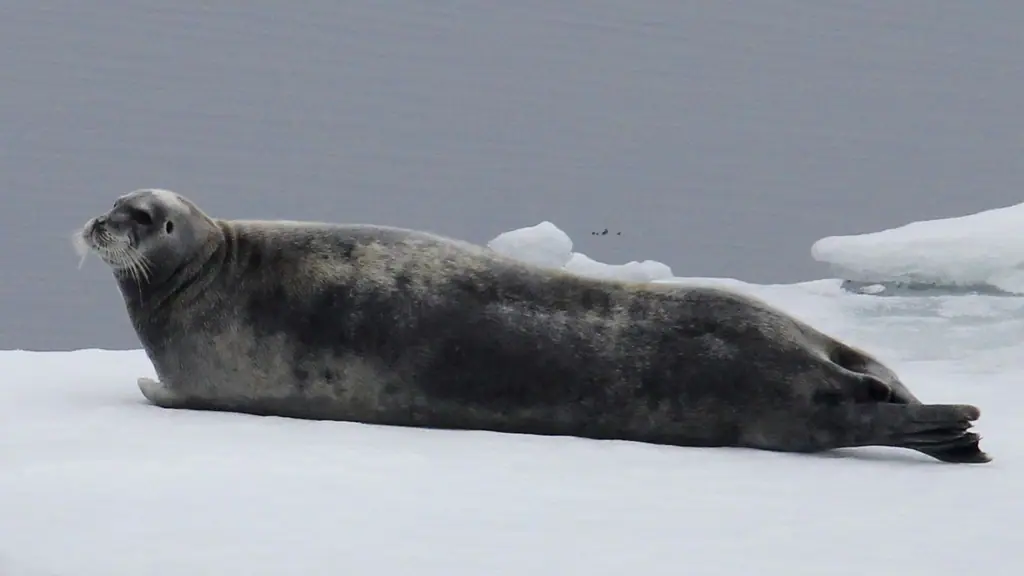
The bearded seal is the largest seal in Svalbard. The Norwegian Polar Institute gives spring weights of up to 425 kg for females, with adults averaging 250–300 kg over the year. Its name comes from the long, sensitive whiskers on its muzzle, which it uses to find prey buried in the seabed (NAMMCO).
Bearded seals feed on the bottom, eating fish, bristle worms, shrimps, clams and other molluscs, so they prefer shallow water, generally less than 200 m deep, with drifting pack ice overhead. Pups are born on ice floes from late March to mid-May, with a peak in Svalbard in early May. They can swim and dive from their first day and are nursed for 18–24 days. In spring, males produce long, descending underwater trills that NAMMCO reports can be heard 25–45 km away in calm conditions.
The harp seal: a long-distance commuter
Harp seals breed on large expanses of pack ice and then disperse widely to feed. Two breeding stocks are relevant to the Barents Sea region. The East Ice stock gives birth in the south-eastern Barents Sea and the White Sea; the West Ice stock pups between Jan Mayen and the east coast of Greenland. Outside the breeding season, harp seals make long foraging trips, mainly into the northern Barents Sea (MOSJ).
Their numbers make them important predators. MOSJ estimates that the East Ice stock eats about 3.5 million tonnes of prey a year in the Barents Sea. Its 2019 estimates put the East Ice stock at about 1.5 million animals and the West Ice stock at about 430,000. Harvest quotas are still calculated for both stocks.
The trends are less reassuring than the totals. East Ice pup production decreased significantly after 2003, and a 2018 survey in the West Ice found a reduction of almost 40%. MOSJ says the East Ice decline has no satisfactory explanation yet; reduced female fertility, probably linked to less available food, is considered the most likely cause, with difficult ice conditions in the White Sea possibly contributing.
The hooded seal: four days of milk
Hooded seals are deep divers of the open ocean that return to drifting pack ice to breed. Adult males can inflate a two-lobed hood on the head and push out an elastic nasal membrane that looks like a pink balloon, both used in displays during the breeding season (NAMMCO).
Their breeding strategy is extreme. Pups are nursed for only three to five days, the shortest lactation of any seal, yet in that time they can almost double their weight, from about 24 kg at birth to as much as 42 kg.
As divers, hooded seals can stay down for up to an hour and reach depths beyond 1,500 m, although typical dives last 15–20 minutes at 100–600 m. In the Greenland Sea they feed on squid, polar cod, capelin and other fish.
The Greenland Sea stock, which breeds in the West Ice, is in poor condition. NAMMCO reports that pup production fell from 28,100 in 1997 to 12,977 in 2018, and total abundance from about 102,000 to 76,623. Commercial sealing by Norwegian and Russian sealers began in earnest in the 1920s, with catches of 40,000–60,000 seals a year until the late 1950s; the hunt was then gradually reduced and, since 2007, has been limited to subsistence and scientific catches. The decline has continued anyway. NAMMCO describes the reasons as unclear, noting that pregnancy rates have not fallen and that ice cover in the breeding area has shrunk substantially.
What changes in the ice mean for seals
Each species depends on ice in a different way, so each responds differently as the Barents Sea warms and its ice cover shrinks (see Understanding Arctic Sea Ice):
- Ringed seals need stable fast ice and enough snow, both of which are becoming less reliable in Svalbard's fjords.
- Bearded seals need drifting floes over shallow feeding grounds; when the ice edge retreats north over deep water, the two can become separated.
- Harp and hooded seals need large, stable areas of pack ice at the right place and time for pupping.
Long-term monitoring is the only way to tell a real trend from a few unusual years. The aerial surveys behind the harp and hooded seal estimates are repeated only every few years, so each new survey is an important data point. For younger readers, the four species make a good comparison exercise: ask students to match each seal to the type of ice it needs and to predict which would be affected first by a winter with no fjord ice.
Sources
- The Cruise Handbook for Svalbard: Svalbard's wildlifeNorwegian Polar Institute
- Ringed sealNAMMCO – North Atlantic Marine Mammal Commission
- Bearded sealNAMMCO – North Atlantic Marine Mammal Commission
- Hooded sealNAMMCO – North Atlantic Marine Mammal Commission
- Harp sealMOSJ – Environmental Monitoring of Svalbard and Jan Mayen
Spotted an error? Email contact@nansenlegacy-symposium.com with the page address. See our editorial policy.