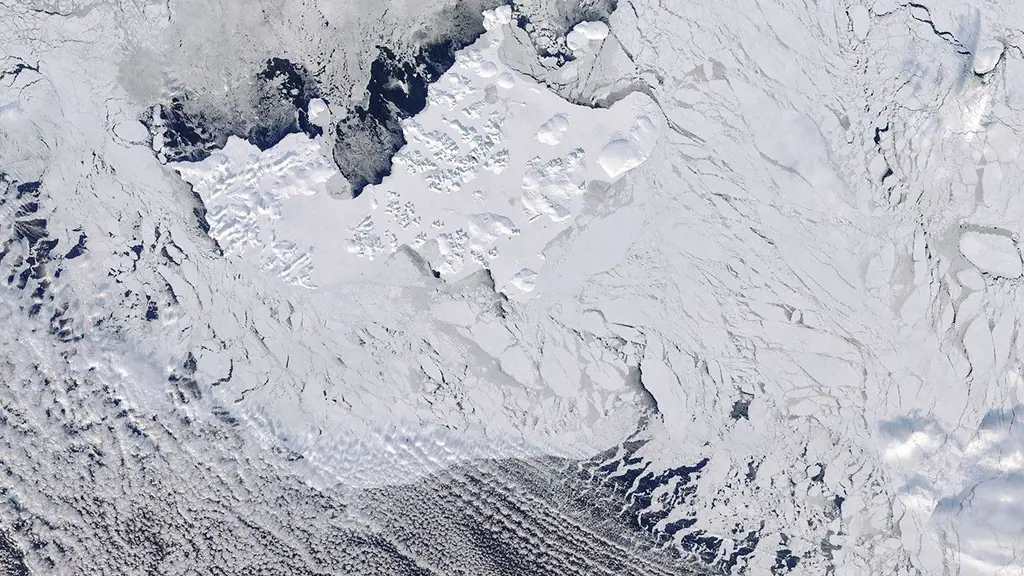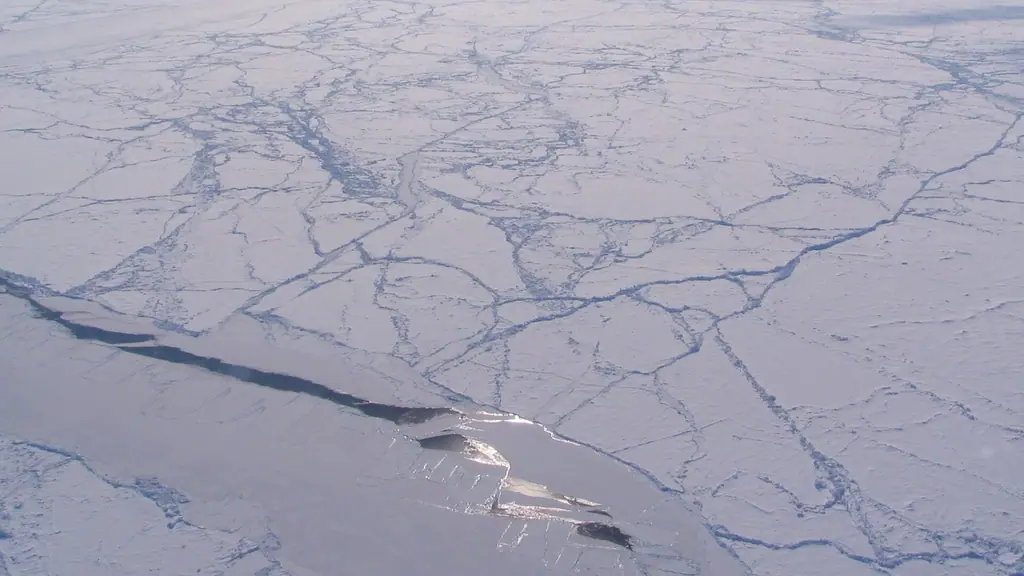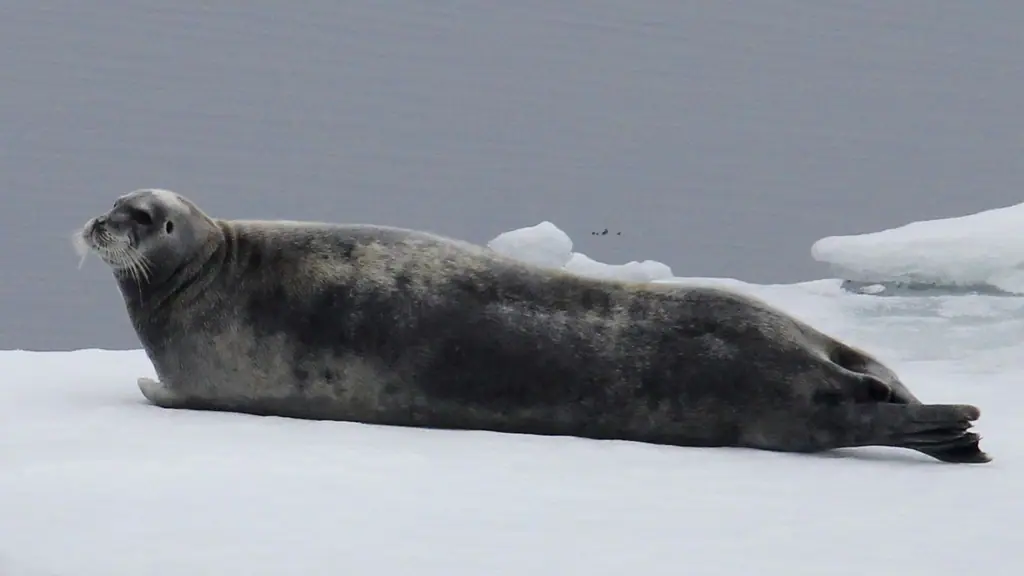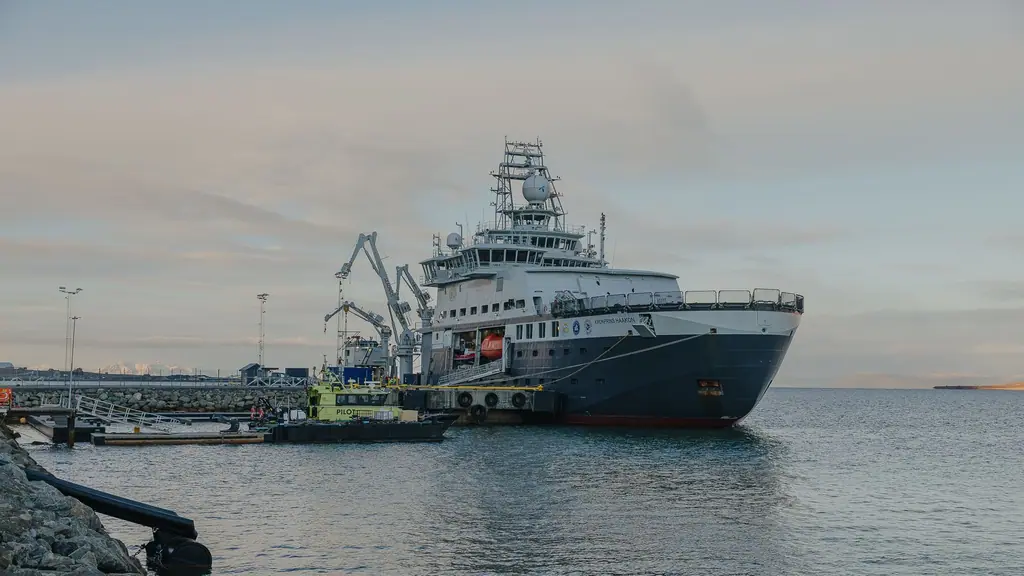
The northern Barents Sea, between Svalbard, Franz Josef Land and the deep Arctic Basin, is where warm Atlantic water meets cold Arctic water and seasonal sea ice. In 2018 a Norwegian research consortium set out to study it as a whole system, sending a new research icebreaker into the region in every season of the year, including the dark winter months.
That consortium was the Nansen Legacy, in Norwegian Arven etter Nansen. It described its aim as providing integrated scientific knowledge on a rapidly changing marine climate and ecosystem, as a basis for sustainable management of the northern Barents Sea and the adjacent Arctic Basin through the twenty-first century (Nansen Legacy).
This article explains who ran the project, how it worked, what it found and where to find its results. It is an independent explainer: this site, Ice Edge, is not part of the Nansen Legacy, its partner institutions or its symposium, and does not speak for them. The project's own website, arvenetternansen.com, is the authoritative source.
Ice Edge is an independent publication. It is not run by, funded by or affiliated with the Nansen Legacy project, UiT The Arctic University of Norway or any partner institution. Our symposium archive describes the project's 2023 conference as a past event, from public records.
The project at a glance
| Item | Detail | Source |
|---|---|---|
| Name | The Nansen Legacy (Arven etter Nansen) | Project website |
| Period | Described as seven years, 2018–2024; UiO lists 2018–2023 and MET Norway 1 January 2017 – 31 December 2023 | Project website; UiO; MET Norway |
| Study area | Northern Barents Sea and adjacent Arctic Basin | Project website |
| Partners | Ten Norwegian institutions (listed below) | Project website; UiO |
| Budget | 740 million NOK in total | Project website |
| Funding | 50% from the Research Council of Norway and the Ministry of Education and Research; 50% in-kind from the partners | Project website |
| People | About 280 researchers, students and technicians (project website); "more than 300 scientists" (2025 announcement) | Project website |
| Main platform | Research icebreaker RV Kronprins Haakon | Project website; Final Report |
| Final report | Nansen Legacy Report Series no. 43, published 25 February 2025; approved by the Research Council of Norway | Final Report; project news |
The differing dates reflect different ways of counting: the final report speaks of six years of planning and seven years of research, and fieldwork at sea ran from 2018 to 2022.
The ten partners
The consortium combined four universities, a university centre, three public institutions with management responsibilities and two private research institutes (UiO):
- UiT The Arctic University of Norway
- University of Bergen
- University of Oslo
- Norwegian University of Science and Technology (NTNU)
- University Centre in Svalbard (UNIS)
- Norwegian Polar Institute
- Institute of Marine Research
- Norwegian Meteorological Institute (MET Norway)
- Akvaplan-niva
- Nansen Environmental and Remote Sensing Center (NERSC)
How the research was organised
The project divided its science into four Research Foci, the "what", and cross-cutting Research Activities, the "how" (Nansen Legacy; UiO):
- Physical drivers: ocean currents, sea ice, the atmosphere and their interactions.
- Human impacts: contaminants, fisheries, shipping and other pressures, alone and combined.
- The living Barents Sea: biodiversity, food webs and seasonal cycles from viruses to fish.
- The future Barents Sea: models and projections of climate, sea ice and ecosystems.
Alongside these ran activities on technology and method development, data management and logistics. The overarching goals, as summarised by UiO, included improving the scientific basis for managing resources beyond the present ice edge, exploring the mechanisms that govern weather, climate and ecosystems, and strengthening national cooperation and the recruitment of young researchers.
Fieldwork in every season
The project's backbone was a line of sampling stations, the Nansen Legacy transect, which extended an established time-series section run by the Institute of Marine Research. It begins in open water south of the Polar Front, crosses the seasonally ice-covered northern shelf and ends just north of the continental slope in the deep Nansen Basin (Final Report).
According to the final report, the project carried out 21 research expeditions totalling 386 days of ship time, about 300 of them on RV Kronprins Haakon. (The project website gives "over 350 days at sea" between 2018 and 2022; the difference is a matter of what is counted.) A palaeo-oceanography cruise in September–October 2018 collected sediment cores, and four seasonal cruises between August 2019 and May 2021 sampled the same area in each quarter of the year, including the dark winter months. Many activities had to be reorganised during the COVID-19 pandemic.
Ships were only part of the toolkit. Moorings recorded the ocean year-round, gliders and other autonomous underwater vehicles extended coverage between cruises, a helicopter-towed electromagnetic sensor mapped sea-ice and snow thickness, and satellite data filled in the large-scale picture. Our article on moorings, gliders and robots under the ice explains how those instruments work.
What the project found
The final report summarises results across ten themes. A few illustrate the range (Final Report):
A hotspot of change. The report describes the Barents Sea as a hotspot for climate change, with the atmosphere having warmed five to seven times faster than the global average and the largest loss of winter sea ice anywhere in the Arctic. Atlantic water flows in at roughly 2.3 million cubic metres per second, and the influence of that water has intensified since 2000, a process known as Atlantification.
Natural variability matters. The project's fieldwork happened to coincide with a temporary cold spell, with a colder ocean and more sea ice, linked to a shift in the large-scale atmospheric pattern known as the Arctic Dipole. That gave researchers a rare chance to see how a warming sea behaves during a short-term reversal, and a reminder that a long-term trend can be interrupted by colder years.
Food webs are flexible but under pressure. Fish stomach studies showed capelin and polar cod shifting towards boreal zooplankton, which are less rich in lipids than the Arctic species they traditionally eat. Modelling based on 30 years of survey data suggested young polar cod depend on sea ice while adults are more affected by predation from Atlantic cod. Our profile of polar cod looks at this in detail.
Better forecasts. Combining field measurements on sea ice with models showed that winter temperatures over the ice were simulated on average 4 °C too warm, mainly because the snow layer was poorly represented. Correcting this fed into an updated Arctic weather forecasting system. See Why Forecasting Arctic Weather Is So Hard.
Projections for 2050 and 2100. Using IPCC scenarios, project researchers projected that air temperatures in the northern Barents Sea would rise by about 6 °C by 2050 whichever emission scenario is followed, because the changes by mid-century are largely locked in by past emissions. By 2100 the rise was projected to exceed 8 °C under medium emissions and 12 °C under high emissions. These are model projections, not observations, and the report stresses that choices made now determine the end-of-century outcome.
The project's central message about the future is a contrast in timescales: conditions in the Barents Sea around 2050 are largely set by greenhouse gases already emitted, while the state of the sea in 2100 depends strongly on emissions from now on.
People, data and the 2023 symposium
The project counted its early-career scientists among its main achievements. It had aimed to recruit 50 PhD students and postdoctoral researchers; by the end, 128 early-career scientists had joined, 60% of them women. Results were published in more than 270 peer-reviewed articles, over 89% of them free to read, and biodiversity data were shared through the international GBIF database (Final Report). The Research Council of Norway approved the final reports in March 2025 (Nansen Legacy).
To mark the end of the project, the Nansen Legacy hosted an international symposium, "Towards a new Arctic Ocean", in Tromsø from 6 to 9 November 2023. The project's press release said it would gather about 250 researchers from Norway and 18 other countries (Nansen Legacy). Our independent archive of that symposium records, from public sources, what the event was and when it took place.
The name honours Fridtjof Nansen, whose drift in the Fram first revealed the warm Atlantic layer inside the Arctic Ocean; his story is told in Fridtjof Nansen and the Fram.
Where to find the results
For primary sources, go to the project itself. The Nansen Legacy Report Series, hosted by UiT's Septentrio platform, includes cruise reports, annual reports and the final report; note that reports in the series are not peer reviewed. Peer-reviewed papers are listed on the project website, and the project's fact sheets summarise key findings on sea ice, biodiversity, ocean acidification and weather forecasting for non-specialists. When citing a result, cite the original paper or report rather than a summary, including this one.
Sources
- About us – The Nansen LegacyThe Nansen Legacy (Arven etter Nansen)
- The Nansen Legacy Final ReportThe Nansen Legacy Report Series, no. 43 (2025)
- Final report approvedThe Nansen Legacy
- The Nansen Legacy (Arven etter Nansen)University of Oslo, Faculty of Mathematics and Natural Sciences
- The Nansen LegacyNorwegian Meteorological Institute (MET Norway)
- The past and future of the Arctic explored in a major research conference in TromsøThe Nansen Legacy
Spotted an error? Email contact@nansenlegacy-symposium.com with the page address. See our editorial policy.