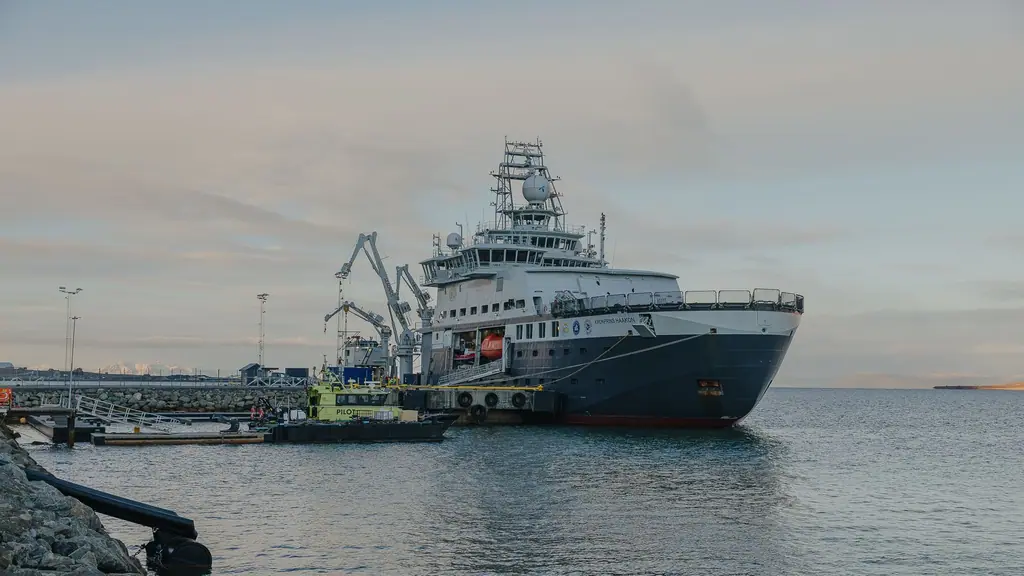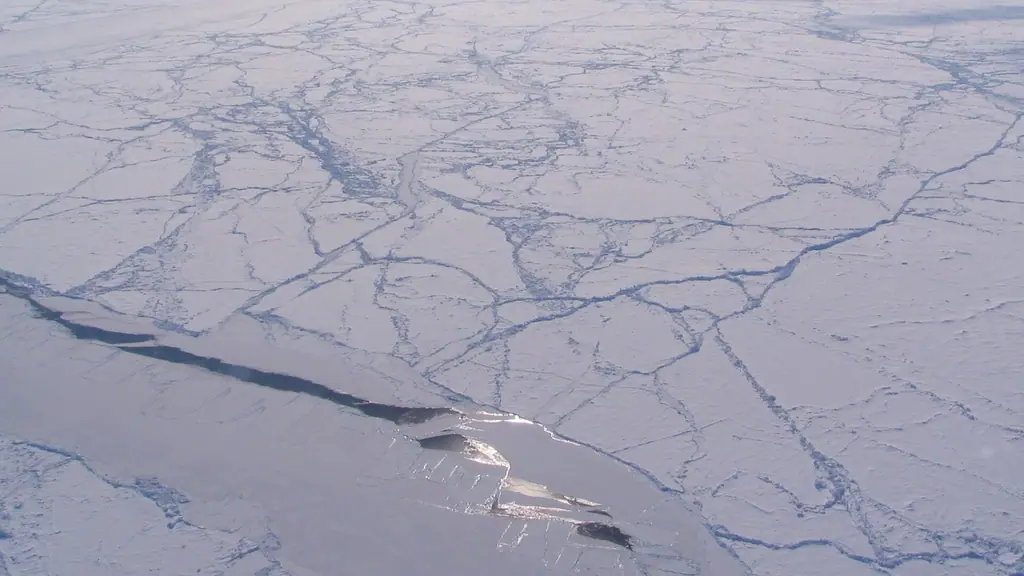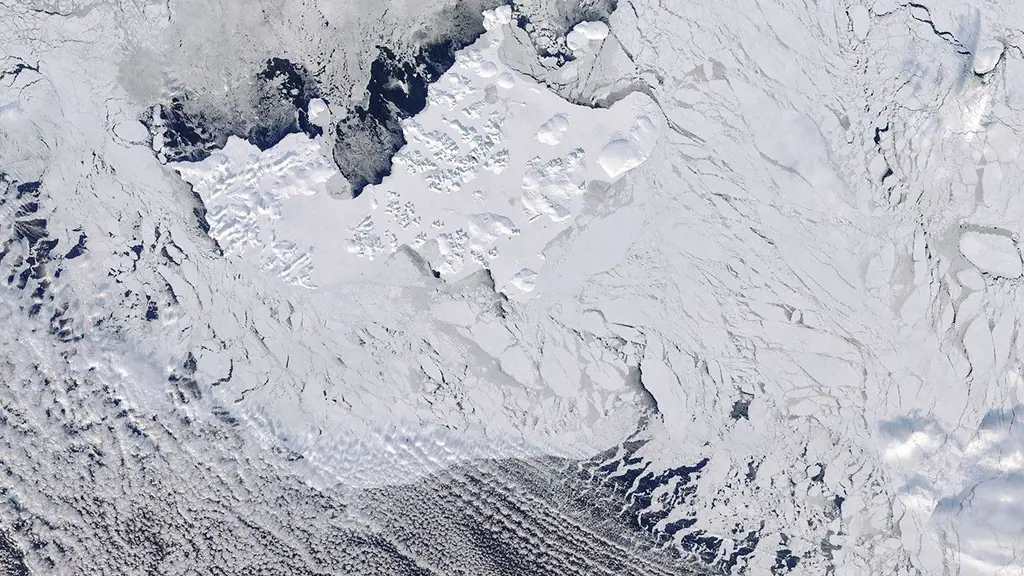
Between northern Norway and Svalbard, a broad current of water from the North Atlantic flows east into the Barents Sea. It is the far end of the warm current system that keeps Norway's coast ice-free in winter. For most of the twentieth century, that Atlantic water met a cold, fresh, ice-covered Arctic in the northern Barents Sea, and the two kept largely to their own layers.
That boundary is moving. Since the mid-2000s, the northern Barents Sea has warmed and become saltier, winter sea ice has declined sharply and fish typical of the Atlantic have spread into waters once dominated by Arctic species. Oceanographers call this transformation Atlantification: a shift of Arctic waters towards a state more like the Atlantic. This article explains the physics behind it, the evidence for it, and what it is doing to the ecosystem.
Two kinds of ocean meeting
The northern Barents Sea sits at a boundary between two water masses.
- Atlantic Water arrives from the south-west. It is relatively warm (above 0 °C, and several degrees warmer near its entry points) and salty, which makes it dense.
- Arctic Water lies to the north and north-east. It is near the freezing point and fresher, because it carries meltwater from sea ice and river water from the Arctic coasts.
In a classic Arctic water column, the cold, fresh layer sits on top and the warmer, saltier Atlantic Water lies underneath. Between them is a halocline, a layer in which salinity increases rapidly with depth. Because fresh water is lighter than salt water, the halocline is very stable: it acts like a lid, stopping the heat in the Atlantic layer from reaching the surface and the sea ice. Oceanographers describe this layering as stratification.
The mechanism: losing the freshwater lid
A natural guess would be that the Barents Sea is warming simply because warmer Atlantic water is flowing in. That is part of the story, but a 2018 study by Sigrid Lind, Randi Ingvaldsen and Tore Furevik in Nature Climate Change showed that something else was also at work in the north.
Using hydrographic observations from 1970 to 2016, they found a sharp increase in temperature and salinity in the northern Barents Sea from the mid-2000s. They linked it to a decline in the amount of sea ice drifting into the region from the Arctic Ocean. Less imported ice meant less meltwater each summer and therefore a thinner, saltier surface layer. With the freshwater lid weakened, winter cooling and wind could stir the water column more deeply, bringing heat and salt up from the Atlantic layer. That upward heat flux in turn prevented new ice from forming, which reduced freshwater further: a self-reinforcing loop.
The authors concluded that the northern Barents Sea "may soon complete the transition" from a cold, stratified Arctic regime to a warm, well-mixed one dominated by Atlantic water.
In the Arctic Ocean, salt, not temperature, mainly controls how stable the water column is. Taking away fresh water at the surface can release heat stored at depth, even if the incoming Atlantic water does not get any warmer.
Evidence from ocean, ice and air
Atlantification has been documented in several independent ways.
| Evidence | What was observed | Source |
|---|---|---|
| Ocean | Sharp rise in temperature and salinity in the northern Barents Sea from the mid-2000s, in records from 1970 to 2016 | Lind et al. 2018 |
| Sea ice | Upward Atlantic Water heat has significantly reduced winter ice formation; sea-ice decline is the main climate consequence | NOAA Arctic Report Card 2025 |
| Air | Annual warming up to seven times the global rate near Novaya Zemlya, 1979–2021, linked mainly to loss of cold-season ice in the Barents Sea | Rantanen et al. 2022 |
| Fish | Boreal fish communities expanded north between 2004 and 2012 at the pace of local warming | Fossheim et al. 2015 |
A 2021 review in Nature Reviews Earth & Environment, led by Randi Ingvaldsen of the Norwegian Institute of Marine Research, concluded that the influence of Atlantic inflows has strengthened since about 2000. It identified different local processes along the route: reduced atmospheric cooling in the southern Barents Sea, reduced freshwater input and ice import in the north, and stronger upper-ocean mixing farther downstream in the Eurasian Basin of the Arctic Ocean. The intense air warming over the region is part of the wider pattern described in What is Arctic amplification?.
Beyond the Barents Sea
The same process is now visible farther into the Arctic Ocean. The NOAA Arctic Report Card 2025 essay on Atlantification reported that by the mid-2010s the halocline in the Eurasian Basin had lost its role as an effective barrier to Atlantic Water heat, with its stability falling by about 30% over three decades. In the eastern Eurasian Basin, the top of the Atlantic Water layer rose from about 150 metres in the early 2000s to as shallow as 70 metres in recent years. The essay describes a positive feedback: weaker stratification brings more heat to the surface, thinner ice melts faster, and the darker open water absorbs more sunlight.
The picture is not uniform. On the Pacific side, in the Amerasian Basin, stratification has instead strengthened since 2007 as fresh water accumulated near the surface. How ocean currents carry heat and salt around the Arctic is explained in Understanding ocean currents.
What changes for life
Ecologists describe the biological side of Atlantification as borealisation: species from the boreal (temperate northern) zone expanding into the Arctic. Ingvaldsen and colleagues list several ecosystem responses: higher production, northward spread of boreal species, a growing role for the open-water (pelagic) community, a more connected food web and a gradual shrinking of the ice-associated part of the ecosystem.
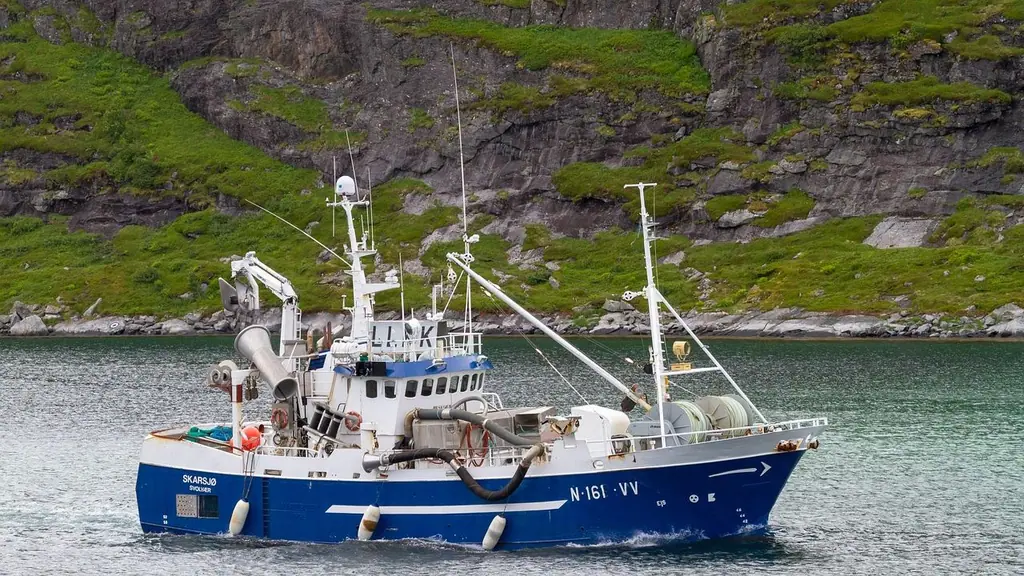
The best-documented case is in fish. Using data from the joint Norwegian–Russian ecosystem surveys, Maria Fossheim and colleagues showed that between 2004 and 2012 boreal fish communities spread north into areas previously dominated by Arctic species, driven largely by greater numbers and wider ranges of large, migratory fish predators. The Arctic shelf community retreated towards the deeper waters bordering the polar basin. For commercial fisheries the shift brings both opportunities and new management questions, discussed in Arctic fisheries and a warming ocean.
Some apparent shifts need care. Atlantic and Arctic species of the copepod Calanus look alike, and a 2023 genetic study around Svalbard found that as many as 40% of the individuals genetically identified as the Arctic C. glacialis were small enough to be mistaken for the Atlantic C. finmarchicus under the microscope (Balazy et al., 2023). The authors suggest the northward spread of the Atlantic species may have been overestimated. Our article on Calanus copepods explains why these small animals matter so much.
What to watch
- Sea-ice import and freshwater. Years with more ice drifting into the northern Barents Sea can temporarily restore the freshwater lid, so the transition will not be smooth.
- Winter observations. Much of the mixing happens in winter, the season least often sampled. The Norwegian Nansen Legacy project, which spent more than 350 days at sea in the northern Barents Sea between 2018 and 2022, included winter cruises that helped fill that gap.
- Ecological tipping points. Researchers are asking whether the ice-associated food web can persist in a region that loses winter ice for good.
The NOAA Arctic Report Card is published each December and is the most accessible place to follow these changes year by year. More articles on the region are collected under Arctic Ocean.
Sources
- Arctic warming hotspot in the northern Barents Sea linked to declining sea-ice importNature Climate Change (Lind et al. 2018)
- Physical manifestations and ecological implications of Arctic AtlantificationNature Reviews Earth & Environment (Ingvaldsen et al. 2021)
- Atlantification of the Arctic Ocean (Arctic Report Card 2025)NOAA
- Recent warming leads to a rapid borealization of fish communities in the ArcticNature Climate Change (Fossheim et al. 2015)
- The Arctic has warmed nearly four times faster than the globe since 1979Communications Earth & Environment (Rantanen et al. 2022)
- Molecular tools prove little auks from Svalbard are extremely selective for Calanus glacialis even when exposed to AtlantificationScientific Reports (Balazy et al. 2023)
Spotted an error? Email contact@nansenlegacy-symposium.com with the page address. See our editorial policy.