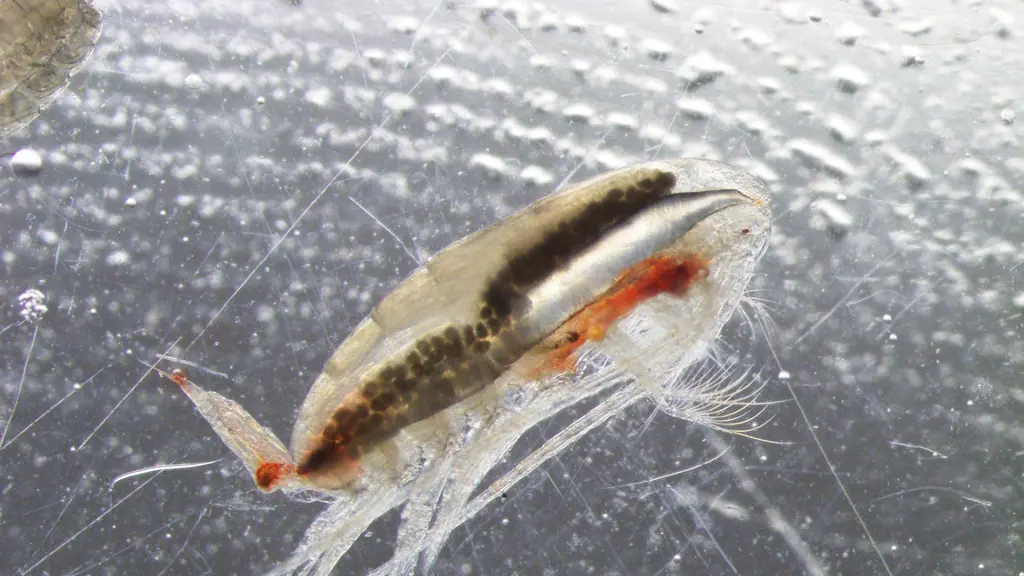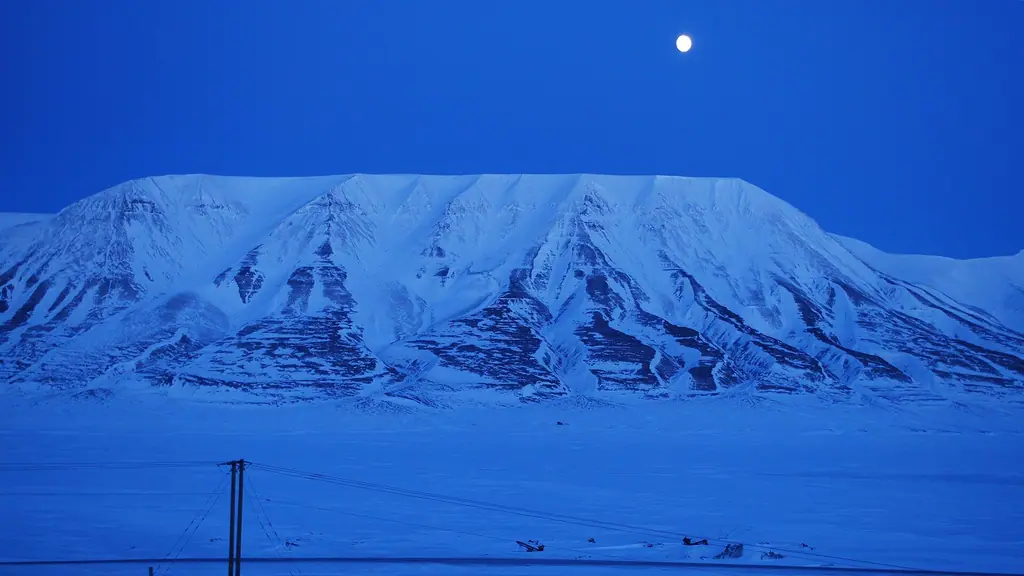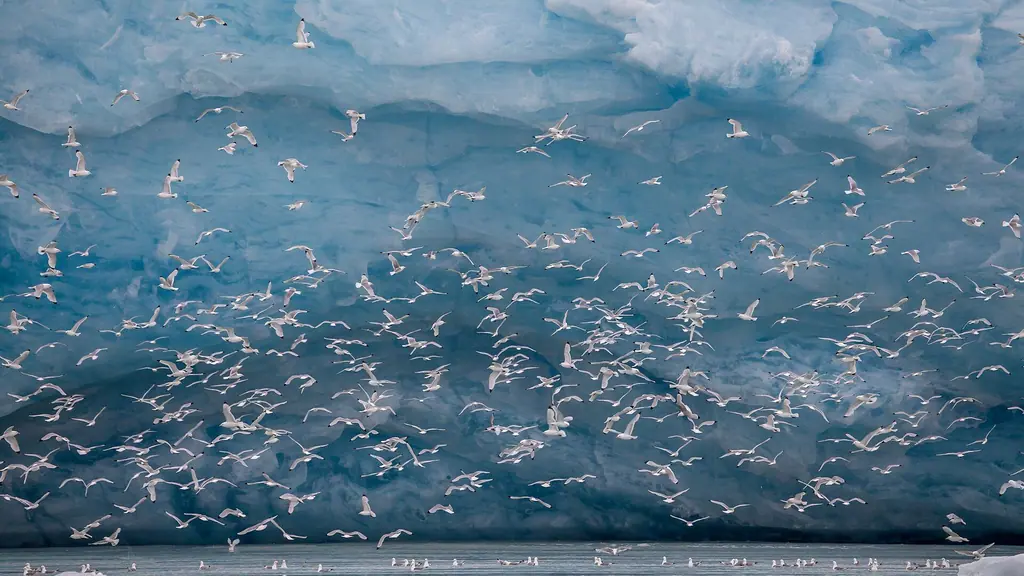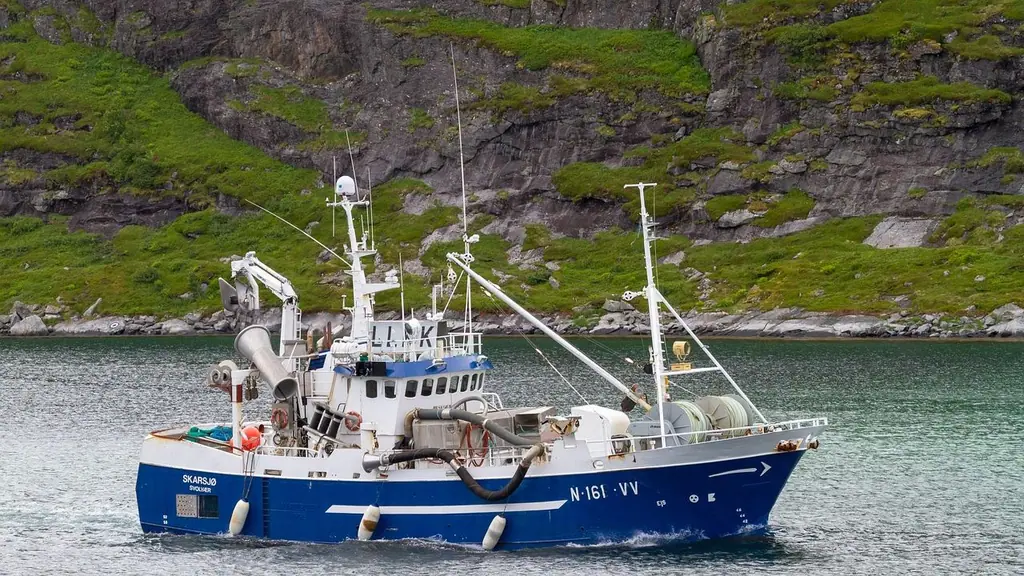
Every year, in winter and again in late summer and autumn, research vessels from Norway and Russia criss-cross the Barents Sea towing trawls and listening with echo sounders, counting fish the way a census counts people. The surveys have run for decades, and they have recorded a striking change: species that once belonged to the warmer south, such as Atlantic cod and haddock, have spread into waters that were dominated by Arctic fish. At the same time, some of the Arctic's own key species have dwindled.
The Barents Sea is one of the world's most productive shelf seas and supports some of the largest fisheries in the North Atlantic. This article looks at what is changing in its fish communities, which changes are linked to warming and which are not, how catches are managed jointly by Norway and Russia, and why the high seas of the central Arctic Ocean are closed to commercial fishing.
A sea split by a front
The Barents Sea is shaped by two water masses. Warm, salty Atlantic Water flows in from the southwest, a continuation of the current that keeps the Norwegian coast ice-free. Cold, fresher Arctic Water occupies the north and east, where sea ice forms in winter. Where they meet lies the Polar Front, a zone of sharp temperature and salinity change that is anchored to the seabed topography in the west but more variable in the east.
South of the front live boreal species: Atlantic cod, haddock, herring and many others. North of it, the fish community is Arctic: polar cod, Arctic sculpins, eelpouts and snailfish, many of them small, slow-growing and associated with the seabed or the underside of the ice. Capelin, a small schooling fish, links the two, feeding on plankton near the ice edge in summer and migrating south to spawn on the Norwegian and Russian coasts. How this system is responding to the inflow of more and warmer Atlantic Water is explained in Atlantification: Why the Barents Sea Is Becoming More Atlantic.
Borealisation: southern fish moving north
The clearest evidence came from the joint ecosystem surveys. Comparing data from 2004 to 2012, a period of marked warming, Fossheim and colleagues found that boreal fish communities expanded northwards at a pace matching the local rate at which temperature zones shifted, while the Arctic fish community retreated towards the deeper waters near the polar basin. Large, mobile predators such as cod led the shift (Fossheim et al., 2015). The authors called the process borealisation, and the term has since been applied to similar changes in the Bering and Chukchi Seas.
Borealisation is not a one-way conveyor. The Norwegian monitoring programme MOSJ reports that warm temperatures in the 2010s expanded the habitat of Northeast Arctic cod, but that its distribution in the Barents Sea has recently contracted, attributed to somewhat lower sea temperatures and a smaller stock (MOSJ: Northeast Arctic cod). Fish follow temperature and food year by year, so short records can mislead in either direction.
Three species, three stories
Northeast Arctic cod
This is the cod stock that spawns along the Norwegian coast and feeds in the Barents Sea. Its total and spawning stocks grew from 2006 and peaked in 2013, helped by relatively warm temperatures and plentiful food. Since then they have declined, and MOSJ estimated the 2025 spawning stock at 330,000 tonnes, below the precautionary reference level of 460,000 tonnes but above the critical level of 220,000 tonnes. The joint Norwegian–Russian working group attributes the continuing decline to a prolonged period of moderate to poor recruitment, meaning too few young fish surviving to join the stock (JRN-AFWG, 2026).
Capelin
Capelin is a key species: cod, seabirds, seals and whales all depend on it. It is also notoriously unstable. When the stock collapsed in the 1980s, cod grew more slowly and became leaner, and hungry harp seals moved down the Norwegian coast, where about 77,000 drowned in fishing nets in 1987–1988 (MOSJ: Capelin). The September 2025 survey measured a total stock of 0.339 million tonnes, of which 0.124 million tonnes were mature, and no winter fishery was opened in 2025 or 2026. MOSJ notes that large numbers of young herring in the Barents Sea have harmed capelin recruitment by eating larvae and competing for food, a reminder that not every change is driven by temperature.
Polar cod
Polar cod is the Arctic counterpart of capelin, a small, fatty fish closely associated with sea ice and a staple for seals and seabirds (see Polar Cod: The Small Fish Holding the Arctic Food Web Together). Its Barents Sea biomass has mostly been below average since 2012 and was about 10% of the long-term average in 2024 and 2025. Spawning now occurs almost only around Svalbard rather than in the former southeastern grounds. MOSJ expects reduced ice and warmer water to shrink its habitat, while noting that the causes of its sudden booms and declines are not known (MOSJ: Polar cod).
| Indicator | Latest value | Reference point or comparison | Source |
|---|---|---|---|
| NE Arctic cod spawning stock, 2025 | 330,000 t | Precautionary level 460,000 t; critical 220,000 t | MOSJ |
| NE Arctic cod quota, 2026 | 285,000 t | Lowest since 1991; advice was 269,440 t | JRN-AFWG 2026; Norwegian Government |
| NE Arctic cod advice, 2027 | 312,667 t | Stock projected to stabilise a little above the precautionary level | JRN-AFWG 2026 |
| Capelin mature stock, Sept 2025 | 0.124 million t | No winter fishery in 2025 or 2026 | MOSJ |
| Polar cod biomass, 2024–2025 | about 10% of average | Long-term survey mean since 1986 | MOSJ |
How the catch is managed
The main commercial stocks of the Barents Sea cross the boundary between Norwegian and Russian waters, so the two countries manage them jointly through the Joint Norwegian–Russian Fisheries Commission. Each year scientists from both countries assess the stocks and recommend catches using agreed harvest control rules, formulas that reduce fishing pressure when a stock falls below precautionary levels. The commission then sets total quotas and divides them.
For 2026, the cod quota was set at 285,000 tonnes, which the Norwegian government described as the lowest since 1991. The scientific advice for 2027 is no more than 312,667 tonnes, an increase reflecting a projected stabilisation of the stock. Since Russia's suspension from the International Council for the Exploration of the Sea (ICES) in March 2022 (Russia then left ICES altogether in December 2025), the cod assessment has been carried out bilaterally by Norwegian and Russian scientists outside ICES, a change the 2026 working group report flags explicitly (JRN-AFWG, 2026).
Warming changes where fish live and how many young survive, but fishing pressure, predator–prey cycles and competition between species matter just as much. Separating these drivers is the central challenge of fisheries science in the Barents Sea.
The central Arctic Ocean: closed before it opened
Further north, beyond any country's 200-nautical-mile zone, lies the high seas portion of the central Arctic Ocean. For most of history it was permanently ice-covered, and no commercial fishery has ever operated there. As summer ice retreats, parts of it are becoming seasonally open water.
Rather than wait for fishing to begin, nine countries and the European Union agreed to prevent it. The Agreement to Prevent Unregulated High Seas Fisheries in the Central Arctic Ocean was signed in Ilulissat, Greenland, on 3 October 2018 and entered into force on 25 June 2021, once all ten parties had ratified it. The parties are Canada, China, Denmark (for Greenland and the Faroe Islands), Iceland, Japan, Norway, Russia, South Korea, the United States and the EU (Fisheries and Oceans Canada).
The agreement:
- bars commercial fishing in the area until adequate scientific information exists to manage it;
- commits the parties to a Joint Program of Scientific Research and Monitoring on the region's ecosystems and fish;
- requires the parties to meet at least every two years to review the science;
- runs for 16 years, with automatic five-year extensions if the parties agree.
It is often described as a rare example of precautionary management: a fishery regulated before it exists. Whether commercially valuable stocks would ever establish in the deep, food-poor central basin is itself uncertain.
What to watch
Signals worth following in the coming years include whether the cod stock stabilises as projected, whether capelin recruitment recovers enough to reopen a fishery, and whether polar cod rebounds from its current low. The MOSJ indicator pages are updated as new survey results come in and give the underlying numbers. For the wider food web these fish sit in, see Arctic Food Chains Explained and Arctic Seabirds and a Changing Ocean; more ecosystem articles are gathered under Marine Ecosystems.
Sources
- Recent warming leads to a rapid borealization of fish communities in the Arctic (Fossheim et al., 2015)Nature Climate Change
- Stock of Northeast Arctic codMOSJ, Environmental Monitoring of Svalbard and Jan Mayen
- Capelin stock in the Barents SeaMOSJ, Environmental Monitoring of Svalbard and Jan Mayen
- Biomass of polar cod in the Barents SeaMOSJ, Environmental Monitoring of Svalbard and Jan Mayen
- Joint Russian Norwegian Arctic Fisheries Working Group (JRN-AFWG) Report 2026Institute of Marine Research (publication record)
- International Agreement to Prevent Unregulated High Seas Fisheries in the Central Arctic OceanFisheries and Oceans Canada
Spotted an error? Email contact@nansenlegacy-symposium.com with the page address. See our editorial policy.