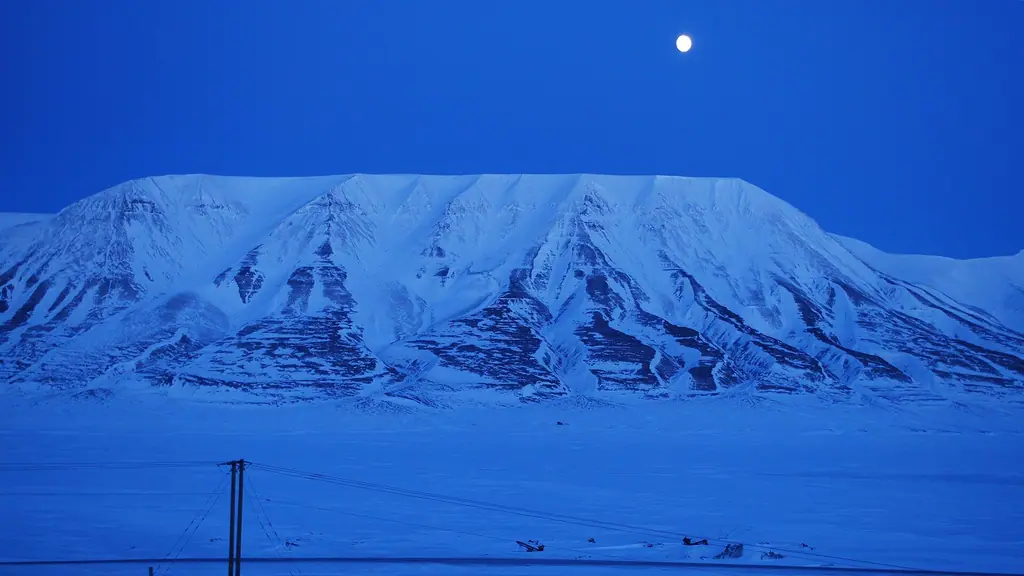
In Longyearbyen, at 78°N in Svalbard, the sun sets in late October and does not rise again until mid-February. For about two and a half months in the middle of that period it stays more than six degrees below the horizon, and even noon brings only a faint blue glow. On land, the season feels like a long pause.
For most of the twentieth century, marine scientists assumed the sea was pausing too. With almost no sunlight there is almost no photosynthesis, so the food web was thought to idle until spring, with animals resting or living off their fat. Since the mid-2000s, winter research campaigns in Svalbard have overturned that view. This article describes what they found, how the measurements were made in the dark, and why the polar night matters for understanding a changing Arctic.
A season that was hardly studied
The polar night was neglected for practical reasons. Ships, scientists and instruments are easier to work with in summer light and calmer weather, and the ice-covered seas are hardest to reach in winter. As a result, most knowledge of Arctic marine life came from spring and summer, and the winter "gap" was filled with assumptions.
A 2015 review led by Jørgen Berge in Progress in Oceanography summarised a decade of winter work around Svalbard. Its central conclusion was that the polar night is not void of biological activity: although primary production is close to zero, the authors found unexpectedly high levels of feeding and reproduction across a wide range of animals and habitats. They also stressed that "polar night" and "winter" are not the same thing ecologically. A 2020 Springer book, Polar Night Marine Ecology, later gathered the growing body of research in one volume.
Migrating in the dark
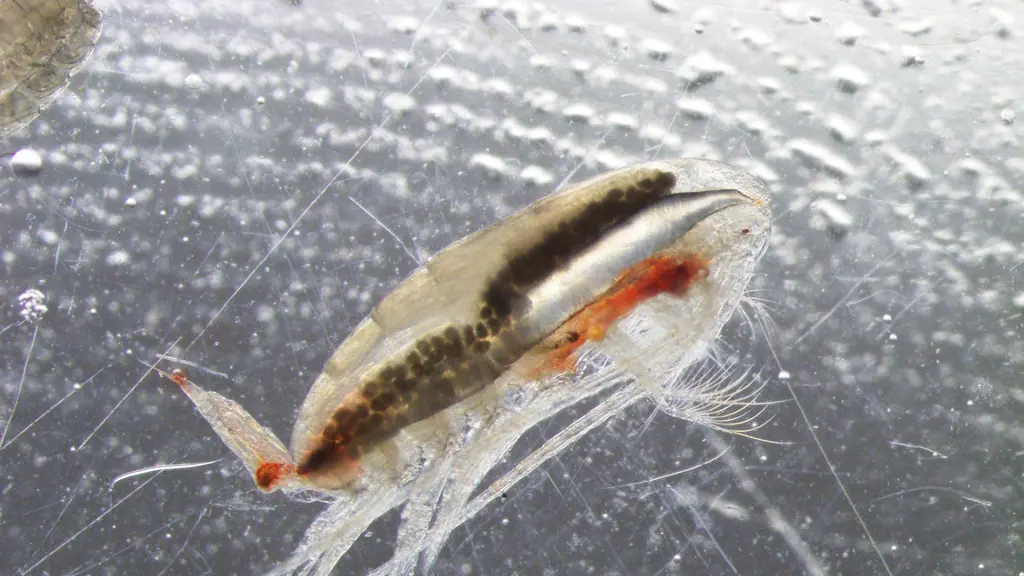
In much of the world's ocean, zooplankton make a daily journey: they rise towards the surface at night to feed and sink to darker, safer depths by day to avoid fish and other visual predators. This diel vertical migration is often described as the largest synchronised movement of biomass on Earth. It is triggered by light, so it was assumed to stop when the sun disappeared.
To test that, researchers moored upward-looking acoustic Doppler current profilers, instruments that send sound pulses upward and record echoes from animals in the water, in two Svalbard fjords: Kongsfjorden at 79°N, which is usually ice-free, and Rijpfjorden at 80°N, which freezes over. In Biology Letters in 2009, Berge and colleagues reported that a near-continuous, if reduced, daily migration continued through the polar night at both sites. Diel changes in light, far too faint for human eyes, were apparently still enough to set the rhythm. The migration was stronger in open water than under ice.
Following the moon
Around the full moon, the pattern changed. A follow-up study led by Kim Last, published in Current Biology in 2016, combined acoustic records from fjords, shelves, slopes and the open Arctic Ocean. In winter, when the moon rose above the horizon, zooplankton across the Arctic shifted from a 24-hour solar rhythm to a 24.8-hour lunar one. Every 29.5 days, around full moon, they also sank en masse from the surface waters to about 50 metres. The authors suggested that moonlight may let predators such as carnivorous zooplankton, fish and birds hunt in winter, and that the zooplankton respond by keeping deeper.
Light in the polar night is not zero, just extremely low. Moonlight, twilight from a sun a few degrees below the horizon, the aurora and bioluminescence together create a light environment that many marine animals can detect and use.
Bioluminescence: the ocean makes its own light
Many marine organisms produce light chemically. In January 2014, Heather Cronin and colleagues measured bioluminescence in Kongsfjorden, at 78.9°N, by lowering a bathyphotometer, an instrument that pumps plankton into an enclosed chamber and records their flashes, with stops every 20 metres. They compared those measurements with modelled light from the sky reaching each depth (Scientific Reports, 2016).
The bioluminescence potential of the plankton community increased with depth, peaking at 80 metres. Near the surface, most light came from dinoflagellates, single-celled algae of the genus Protoperidinium; from 40 metres down, the copepod Metridia longa dominated. Between 20 and 40 metres, bioluminescence went from less than 3% to more than 85% of the available light, and below 60 metres it supplied more than 98%. The authors called this transition the bioluminescence compensation depth.
Why does it matter? In a dark sea, a predator that can see a flash may find prey, and prey that flash may startle predators or attract larger hunters. Cronin and colleagues suggested that the 20–40 metre transition zone, where the community and the light source both change, could be an important place for predator–prey interactions in winter.
Feeding and spawning without the sun
The idea that Arctic animals simply wait out winter on stored fat turned out to be only part of the truth.
- Copepods that breed in the dark. The large copepod Calanus hyperboreus spawns in winter, deep in the water column, using fat it built up the previous summer rather than fresh food. The 2015 review identifies using the dark season for reproduction as a common adaptation among polar-night animals. Its eggs and larvae are then ready to feed when the spring bloom begins. Our article on Calanus copepods explains this strategy in detail.
- Active feeding. The 2015 review reported unexpectedly high levels of feeding across many groups during the polar night, which means energy keeps moving through the food web described in Arctic food chains explained.
- Plankton under winter ice. In December 2019, a Nansen Legacy cruise on the icebreaker Kronprins Haakon sampled a transect from 82°N to 76°N in full darkness. Shelled pteropods, small swimming snails, reached their highest abundances in the top 20 metres, mostly as juveniles and larvae of the polar species Limacina helicina, alongside many empty shells (Zamelczyk et al., Frontiers in Marine Science, 2021).
How scientists work in the dark
Polar-night research combines instruments that need no light with careful fieldwork.
| Method | What it records | Example |
|---|---|---|
| Moored acoustic profilers | Zooplankton movement, every few minutes, for months | Daily and lunar migration in Svalbard fjords |
| Bathyphotometers and light sensors | Bioluminescence and extremely low ambient light | Kongsfjorden light budget |
| Nets and water samples from ships | Species, life stages, gut contents, fat reserves | Winter cruises in fjords and the northern Barents Sea |
| Experiments on board | Feeding, growth and behaviour under controlled conditions | Feeding rates of zooplankton in winter |
One complication is the ship itself. Deck and cabin lights are far brighter than anything natural in the polar night, and animals can react to them. Winter researchers therefore pay close attention to light pollution from their own vessels when interpreting behaviour. For an overview of how such evidence is weighed, see Scientific methods in polar research.
Winter fieldwork in Svalbard involves darkness, extreme cold, sea ice and the risk of encountering polar bears. Researchers work in teams with headlamps and survival suits, follow strict ice-safety rules and carry polar bear protection as Svalbard's regulations require.
Why the polar night matters for a changing Arctic
As sea ice retreats, more of the Arctic Ocean is open water in winter. Berge and colleagues found in 2009 that winter migration was stronger in open water than under ice, and suggested that the biologically driven downward flux of carbon could increase if winter ice continues to decline. Ships and coastal activity also add artificial light to a system tuned to moonlight, a factor researchers now take into account.
Understanding winter is therefore essential for predicting how Arctic ecosystems will respond to warming, including the boreal species arriving from the south as part of the Atlantification of the Barents Sea.
Explore further
- Compare a day length table for Longyearbyen (78°N) with one for Tromsø (69.6°N) and your own town, and work out how long each place goes without sunrise.
- Look up a moon-phase calendar for December and January and consider when zooplankton in Svalbard would be expected to sink to about 50 m.
- More articles on Arctic food webs and seasons are collected under Marine Ecosystems, and the life in sea ice, water and seabed is surveyed in Marine biodiversity in the Arctic.
Sources
- In the dark: a review of ecosystem processes during the Arctic polar nightProgress in Oceanography (Berge et al. 2015)
- Diel vertical migration of Arctic zooplankton during the polar nightBiology Letters (Berge et al. 2009)
- Moonlight drives ocean-scale mass vertical migration of zooplankton during the Arctic winterCurrent Biology (Last et al. 2016)
- Bioluminescence as an ecological factor during high Arctic polar nightScientific Reports (Cronin et al. 2016)
- Polar Night Marine EcologySpringer, Advances in Polar Ecology (2020)
- Distribution and abundances of planktic foraminifera and shelled pteropods during the polar night in the sea-ice covered northern Barents SeaFrontiers in Marine Science (Zamelczyk et al. 2021)
Spotted an error? Email contact@nansenlegacy-symposium.com with the page address. See our editorial policy.