Stand at the North Pole and you are on drifting sea ice a couple of metres thick, above an ocean more than 4,000 metres deep. Stand at the South Pole and you are on an ice sheet more than two and a half kilometres thick, resting on solid rock. The two poles share cold, darkness and months of midnight sun, but they are geographic opposites.
That single difference, an ocean surrounded by land in the north and land surrounded by ocean in the south, explains much of what makes their ecosystems distinct: how sea ice behaves, which small animals carry energy through the food web, which large predators live there, and even how the regions are governed. This article works through the contrasts and the surprising similarities.
Geography first
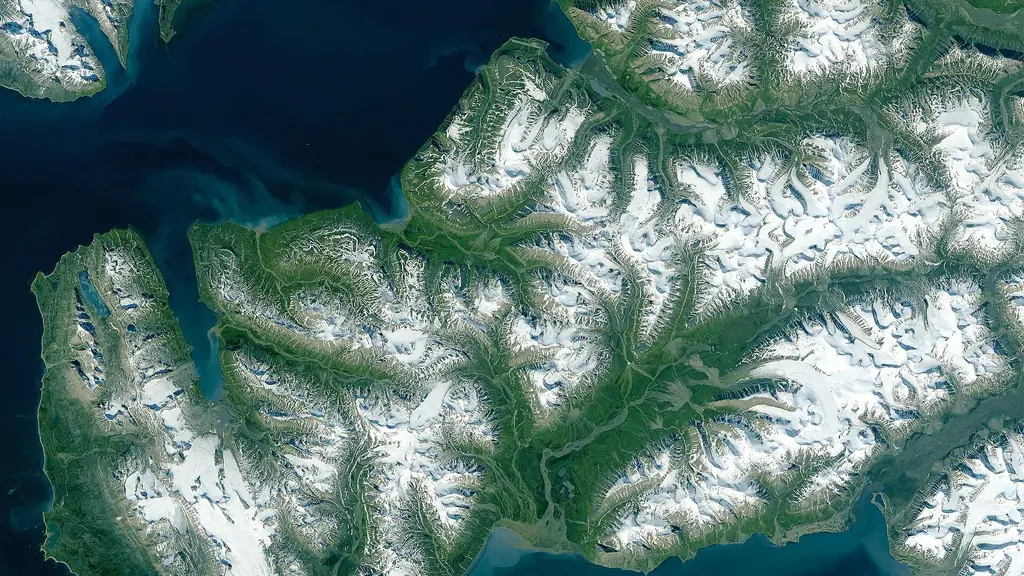
The Arctic Ocean is enclosed by North America, Greenland and Eurasia, with its main deep connection to the Atlantic through Fram Strait and a shallow one to the Pacific through the Bering Strait. Antarctica, by contrast, is a high, ice-covered continent isolated by the Southern Ocean and the strong eastward Antarctic Circumpolar Current, which flows around it unbroken by land.
Sea ice: thick and old versus wide and seasonal
Because land blocks Arctic sea ice from spreading south, ice tends to stay in the basin, converge and survive several summers. Antarctic sea ice can grow north freely in winter, but there is no continent to hold it in summer, so most of it melts each year. The result, in NSIDC's numbers for 1981–2010, is that the Antarctic has "higher highs and lower lows".
| Measure | Arctic | Antarctic |
|---|---|---|
| Average maximum extent, 1981–2010 (million km²) | 15.5 | 18.6 |
| Average minimum extent, 1981–2010 (million km²) | 6.3 | 2.8 |
| Month of maximum | March | September–October |
| Month of minimum | September | February–March |
| Ice age | Mixture of first-year and multiyear ice | Mostly first-year ice |
| Trend since the late 1970s | Clear decline, especially in summer and autumn | Little overall trend to 2016, then record lows |
Source: NSIDC. The trends differ too. The IPCC's Sixth Assessment Report found that current Arctic sea-ice cover is at its lowest level since at least 1850 (high confidence), while there was no significant trend in Antarctic sea-ice area from 1979 to 2020. Since 2016, however, Antarctic ice has repeatedly hit record lows; on 10 September 2023 it was 1.75 million km² below the 1981–2010 average, far below any earlier winter in the 45-year record. NSIDC scientists have described this as possibly pointing to a regime shift, though they stop short of calling it definitive.
Food webs: copepods and polar cod versus krill
Both polar oceans run on short, intense bursts of algal growth in spring and summer, including algae growing in and under sea ice. What differs is the main link between those algae and larger animals.
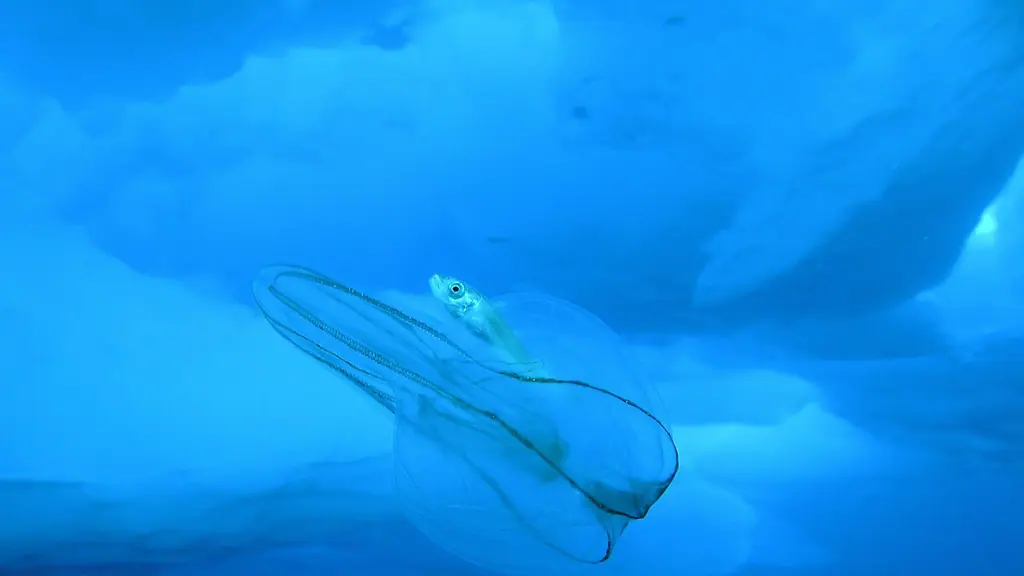
In the Arctic, much of the energy passes through fat-rich copepods of the genus Calanus, small crustaceans a few millimetres long that store large oil reserves for winter (see our article on Calanus copepods). They are eaten by polar cod, a small fish that is itself a staple for seals, seabirds and whales; our article on polar cod explains its central role.
In the Southern Ocean, the keystone is Antarctic krill (Euphausia superba), a shrimp-like crustacean about 6 cm long. The Australian Antarctic Division estimates that some 400 million tonnes of krill live in the Southern Ocean, in swarms that can reach 30,000 animals per cubic metre. Young krill feed on algae growing on the underside of sea ice, which links krill survival to winter ice cover. Penguins, seals, seabirds and baleen whales all depend heavily on them.
The two food webs are built on the same pattern: sea-ice and open-water algae, then a small, abundant, energy-rich crustacean, then fish, birds and mammals. The species filling each role are different because the two polar oceans have been isolated from each other for millions of years.
Top predators: bears and foxes versus penguins and seals
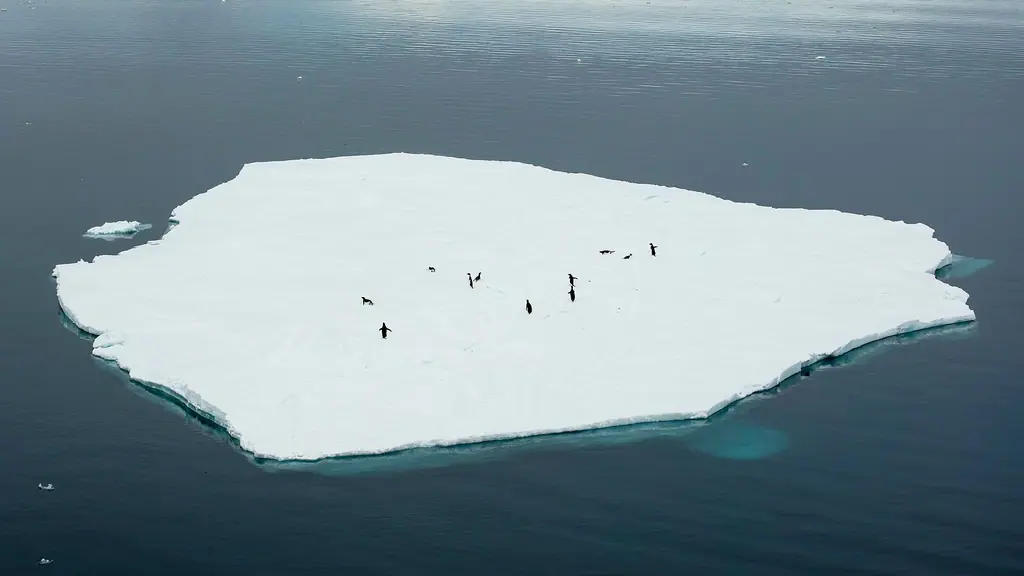
The most famous contrast is that polar bears live only in the Arctic and penguins almost entirely in the Southern Hemisphere. This is not chance. Polar bears evolved from land-dwelling bears on the continents that surround the Arctic Ocean and hunt seals from the sea ice (see how polar bears are adapted to the sea ice). Antarctica has been isolated by ocean for millions of years, so no land predator ever reached it, and flightless birds nesting on the ice face no threat from foxes or bears.
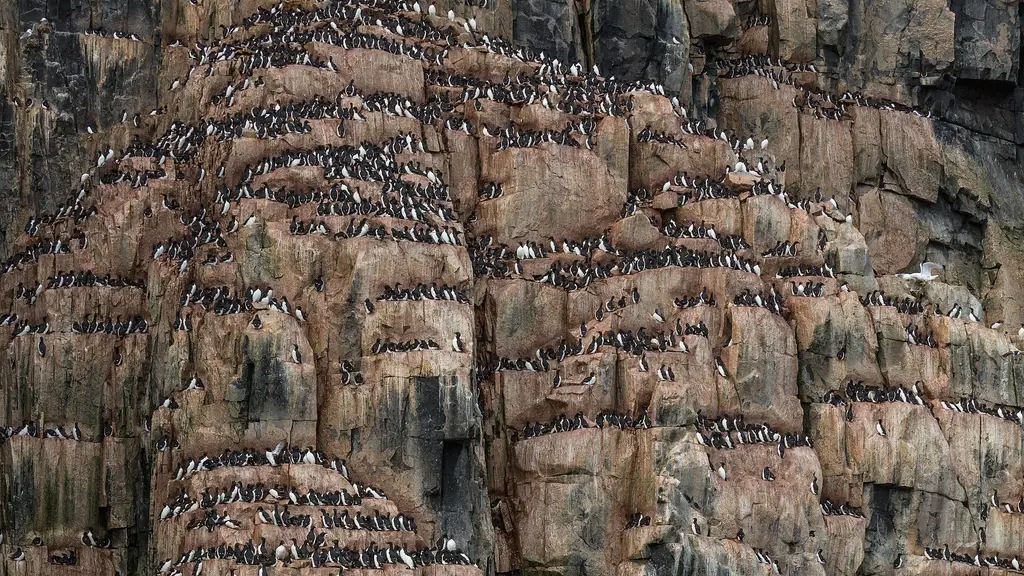
The Arctic's land connection shows elsewhere too. Arctic foxes, reindeer, lemmings and wolves live on the tundra, and many birds migrate north each summer to breed. Antarctica has no native land mammals; its largest permanent land animals are tiny invertebrates. Its large animals, seals, penguins and seabirds, all feed at sea.
Both regions share some groups. Seals live in both, though the species differ, and baleen whales migrate to both polar oceans to feed in summer. Fish in both regions produce antifreeze proteins that stop their body fluids from freezing in water colder than 0 °C.
People and governance
Here, too, geography decides. The Arctic is part of eight sovereign states, and the Arctic Council notes that the northern regions of those states are home to more than four million people, about 500,000 of whom belong to Indigenous Peoples. The Arctic Council, formally established by the Ottawa Declaration in 1996, brings together the eight Arctic states and six organisations of Indigenous Peoples, which hold Permanent Participant status. Its decisions require consensus among the eight states.
Antarctica has no permanent population, only research and support staff who rotate through stations. It is governed by the Antarctic Treaty, signed in Washington on 1 December 1959 by twelve countries active there during the International Geophysical Year and in force since 1961. The treaty, now with 58 Parties, reserves Antarctica for peaceful purposes, guarantees freedom of scientific investigation and freezes territorial claims.
| Feature | Arctic | Antarctic |
|---|---|---|
| Geography | Ocean surrounded by continents | Continent surrounded by ocean |
| Key small crustacean | Calanus copepods | Antarctic krill |
| Iconic predators | Polar bear, Arctic fox | Penguins, leopard seal |
| Native land mammals | Yes (fox, reindeer, lemming and others) | None |
| Permanent residents | More than 4 million, about 500,000 Indigenous | None |
| Main international framework | Arctic Council (1996), national sovereignty | Antarctic Treaty (1959) |
Why the comparison matters for science
Comparing the poles helps scientists separate general rules from local accidents. If ice algae, a dominant crustacean grazer and lipid-rich food chains appear in both places, those features probably reflect how life copes with extreme seasonality. If the two regions respond differently to warming, the reasons, such as the Arctic's enclosed basin and inflow of warm Atlantic water versus the Southern Ocean's open circulation, point to the processes that matter most.
To explore further, start with our survey of marine biodiversity in the Arctic, the step-by-step guide to Arctic food chains and the basics of how sea ice forms and melts. NSIDC's Sea Ice Index lets you plot both hemispheres side by side, which is one of the quickest ways to see how differently they behave. More comparisons are collected under Arctic Biodiversity.
Sources
- How does Antarctic sea ice differ from Arctic sea ice?National Snow and Ice Data Center (NSIDC)
- Has Antarctic sea ice hit a breaking point?National Snow and Ice Data Center (NSIDC)
- Regional fact sheet: Polar regions (AR6 Working Group I)Intergovernmental Panel on Climate Change (IPCC)
- KrillAustralian Antarctic Division
- The Antarctic TreatySecretariat of the Antarctic Treaty
- About the Arctic CouncilArctic Council
Spotted an error? Email contact@nansenlegacy-symposium.com with the page address. See our editorial policy.