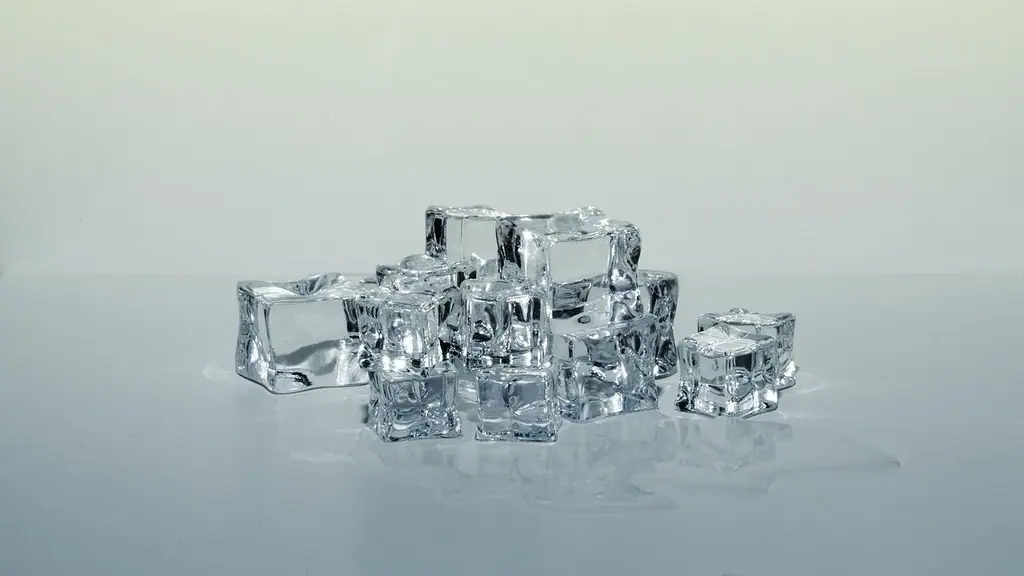
Open the freezer, take out an ice cube and drop it into a glass of water, and a five-year-old will notice something straight away: it floats. That small observation is the start of understanding one of the most important surfaces on Earth. Every winter, the sea around the North Pole freezes into a floating lid of ice millions of square kilometres across, and every summer much of it melts again.
Young children can grasp the key ideas about sea ice through things they can see and touch. This guide gives parents and teachers of children aged about 5 to 8 a handful of accurate, simple explanations, answers to the questions children commonly ask, and two kitchen experiments that show why salty water behaves differently from fresh water. Both experiments need an adult present.
Five big ideas, in child-sized words
You do not need to cover everything at once. These five ideas build on each other and can be spread over several conversations.
- Sea ice is frozen seawater. It is not snow and it is not an iceberg. It forms when the top of the ocean gets very cold and freezes.
- Salty water has to be colder to freeze. Fresh water from the tap freezes at 0 °C. Seawater has to get colder, about −1.8 °C, before it turns to ice (NSIDC).
- Ice floats. Ice takes up a little more space than the water it came from, so it is lighter for its size and floats, with most of it below the surface.
- Sea ice grows and shrinks with the seasons. It spreads out in the dark, cold winter and shrinks in the sunny summer. Some thick, old ice usually survives the summer near the North Pole.
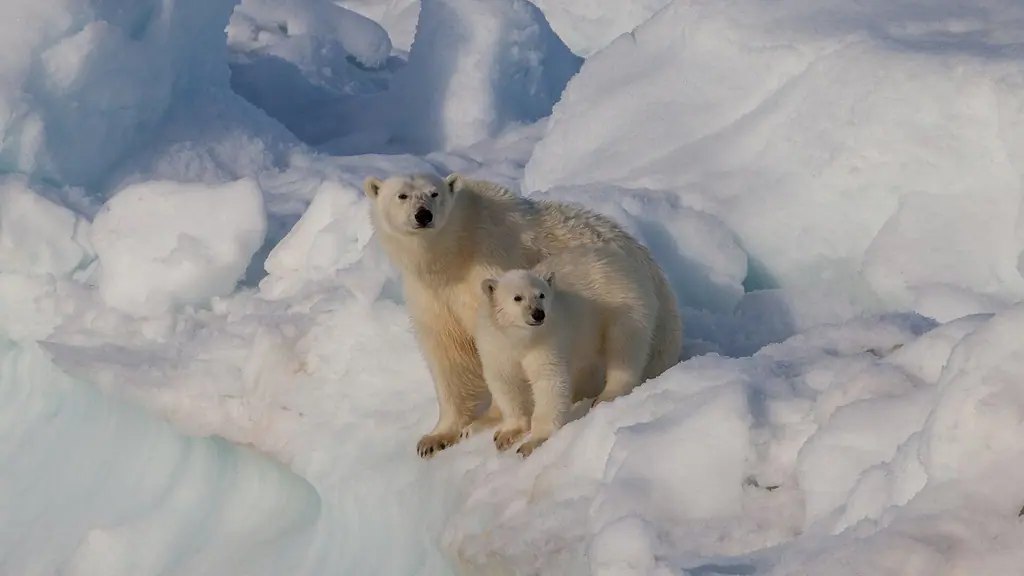
- Animals need it. Polar bears walk and hunt on the ice; seals rest and raise their pups on it; tiny plant-like living things called algae grow underneath it and feed the animals that live in the sea.
For young children, "sea ice is the ocean's frozen lid" is a helpful picture. It is thin compared with the ocean beneath, it floats, it comes and goes with the seasons, and many animals live on it or under it.
Questions children ask
Is sea ice salty? A little. When seawater freezes, most of the salt is squeezed out, but some gets trapped in tiny pockets of very salty water called brine. As ice gets older, the brine slowly drains away, so old ice is much fresher than new ice (NSIDC quick facts).
Is it the same as an iceberg? No. Icebergs are pieces that break off glaciers, which are made from snow that fell on land. Sea ice is made from the sea itself.
Why do polar bears need ice? Polar bears catch seals, mainly ringed and bearded seals. They hunt from the sea ice, waiting at open cracks called leads and at the holes seals use to breathe (Polar Bears International). More on how bears manage this is in How Polar Bears Are Adapted to Life on the Sea Ice.
Why does it matter if the ice is white? White ice reflects much of the sunlight back to space, while dark water soaks it up and warms. NASA's children's pages compare sea ice to "a natural air conditioner for the planet" (NASA).
Is there sea ice at the South Pole too? Yes, around Antarctica. There the ice grows from about 3 million km² in summer to about 20 million km² in winter, one of the biggest seasonal changes on the planet (Discovering Antarctica). The differences between the two poles are explored in Arctic vs Antarctic Ecosystems.
Experiment 1: Which freezes first, fresh or salty water?
This shows big idea number 2 and makes "brine pockets" visible.
You will need: two identical clear plastic cups, a measuring jug, tap water, table salt, a teaspoon, a pen and sticky labels, a small tray, a freezer, and paper for drawing what you see.
- Label one cup "fresh" and one "salty".
- Measure 250 ml of tap water into each cup.
- Stir 1½ level teaspoons of salt (about 9 g) into the "salty" cup until it disappears. This makes water roughly as salty as the ocean.
- Ask your child to predict: which cup will freeze first? Draw the prediction.
- An adult places both cups on a tray in the freezer.
- Check together every 30 to 45 minutes. Gently tilt each cup or touch the surface with a spoon. Note when ice first appears and when each cup is mostly frozen.
- After several hours or overnight, take both out and compare. Tap the surfaces with a spoon, look at the colour and feel the texture through a cloth.
What usually happens: the fresh water freezes first and forms hard, smooth ice. The salty water takes longer and its ice is often softer, slushier and wetter, with small pockets of very salty liquid that stay unfrozen. Those pockets are just like the brine inside real sea ice. Exact times depend on your freezer, so focus on the comparison, not the clock.
Talk about it: the ocean is salty, so it has to get colder than a puddle before it freezes. That is why sea ice only forms where winters are very cold.
Experiment 2: The melting race
This experiment shows what happens when sea ice melts into the ocean, and it is surprising for adults as well as children.
You will need: an ice-cube tray, water, blue food colouring, two identical clear plastic cups, table salt, a tablespoon, a jug of room-temperature tap water, and a timer.
- The day before, an adult adds two or three drops of blue food colouring to the water in an ice-cube tray and freezes it.
- Fill both cups with room-temperature water, about 250 ml each.
- Stir 1 tablespoon of salt into one cup until it dissolves, and label it "salty". This is saltier than seawater, which makes the effect easier to see.
- Wait a minute for the water to settle and stop moving.
- At the same moment, gently place one blue ice cube in each cup.
- Watch from the side at eye level, and start the timer. Which cube melts first? Where does the blue water go?
What usually happens: in the fresh cup, blue streaks pour downwards from the cube and the cube melts noticeably faster. In the salty cup, the blue water spreads out in a layer at the top and the cube lasts longer.
Why: cold water is heavier than warm water, and salty water is heavier than fresh water. In the fresh cup, the cold meltwater sinks, and warmer water moves up to take its place against the cube. In the salty cup, the meltwater is fresh, so it floats on the salty water, wrapping the cube in a cold layer.
Connect to the Arctic: when sea ice melts in summer, a layer of fresher water forms on top of the salty ocean, just like the blue layer. Scientists study this layer because it affects how the ocean mixes and where tiny plant-like algae can grow. Older children can read more in Understanding Arctic Sea Ice.
Safety notes for both experiments
An adult should be present throughout and should handle the freezer. Use plastic cups, not glass, so nothing breaks if a cup is dropped. Do not hold ice cubes for more than a few seconds and never put lips, tongues or wet fingers on anything straight from the freezer, because very cold surfaces can stick to and hurt skin. Ice cubes and small pieces of ice can be a choking hazard, so do not let children suck or chew them, and keep them away from babies and toddlers. The salty water is not for drinking: keep salt and salty water away from toddlers and pets, as eating a lot of salt can make them ill. Food colouring stains, so use an apron and cover the table. Wipe up spills straight away to avoid slips, and wash hands afterwards. No hot water, heat or special chemicals are needed.
Talking about a changing Arctic
Children often hear that "the ice is melting" and may worry. You can be honest and calm at the same time. NASA's children's pages explain that satellites have measured Arctic sea ice since 1979, that the smallest summer ice cover on record was in 2012, and that summer sea ice today is about 30–40% smaller than in 1979 (NASA).
For this age group, it helps to put the emphasis on what people are doing: scientists watching the ice from space and from ships, communities and countries working to reduce pollution, and families learning about nature. Keep explanations short, follow your child's questions rather than adding new worries, and come back to the topic another day. A fuller approach for parents and teachers is set out in Teaching Children About Climate and Biodiversity Without Fear.
Where to go next
Children who enjoy these experiments might try drawing an Arctic food chain from algae under the ice up to a polar bear, or keeping a "freezer diary" with drawings at each check. For older pupils, the six climate science activities for the classroom extend these ideas to albedo and sea level, and more ideas for teachers and families are gathered under Resources for Teachers and Families.
Sources
- What Is Sea Ice and How Is It Changing?NASA Science for Kids
- The science of sea iceNational Snow and Ice Data Center
- Quick facts about sea iceNational Snow and Ice Data Center
- Polar bear factsPolar Bears International
- Seasonal change (Discovering Antarctica)British Antarctic Survey and Royal Geographical Society
Spotted an error? Email contact@nansenlegacy-symposium.com with the page address. See our editorial policy.