Careers in Polar Science: Paths into Arctic Research
The roles behind Arctic research, from sea-ice physicists to ship engineers and data scientists, with study routes, field-safety training and support networks.
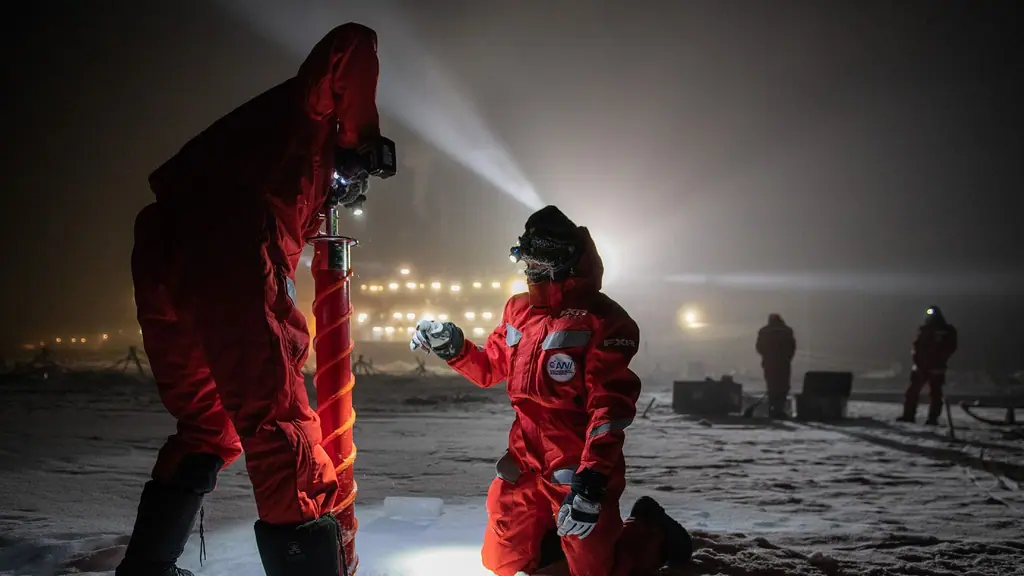
Look at the passenger list of a research icebreaker heading into the Barents Sea and you will find far more than "scientists". There are physical oceanographers preparing instruments to lower through the water, biologists labelling sample bottles, a sea-ice team checking drills and survival suits, engineers who built the moorings being recovered, technicians running the ship's laboratories, and a full marine crew of officers, deckhands, engineers and cooks. Back on land, data managers, modellers and software developers will process what the cruise collects for years.
Polar science is a team effort, and there are many ways into it. This article outlines the main roles, the study routes that lead to them, the safety training fieldwork demands, and the networks that help people at the start of their careers. It is written for secondary and university students, career changers and the teachers and parents who advise them.
The roles behind Arctic research
| Role | What the work involves | Typical background |
|---|---|---|
| Physical oceanographer | Measures and models currents, temperature, salinity and mixing | Physics, mathematics, oceanography |
| Sea-ice physicist | Studies how ice forms, deforms, melts and interacts with ocean and air | Physics, geophysics, engineering |
| Marine ecologist or biologist | Studies plankton, fish, seabirds and mammals and their food webs | Biology, ecology, marine science |
| Biogeochemist | Tracks carbon, nutrients, oxygen and contaminants through the ocean | Chemistry, earth science |
| Atmospheric scientist or meteorologist | Observes and forecasts Arctic weather and climate | Physics, meteorology, mathematics |
| Glaciologist or geologist | Studies glaciers, permafrost and seabed sediments | Geology, physical geography, geophysics |
| Data scientist or modeller | Builds and runs models, manages and analyses large datasets | Mathematics, computer science, physics |
| Instrument or ocean engineer | Designs, builds and maintains moorings, gliders, sensors and samplers | Electronics, mechanical engineering |
| Laboratory or field technician | Prepares equipment, runs analyses, supports sampling at sea and on ice | Vocational or degree training in science or engineering |
| Ship's crew | Navigates, operates and maintains research vessels | Maritime academy and seafarer certification |
| Communicator, educator or policy adviser | Explains research to the public, schools or decision-makers | Any science degree plus communication or policy skills |
Many careers blend several of these. An oceanographer may spend more time writing code than at sea; an engineer may lead fieldwork; a biologist may specialise in statistics. The ways these roles fit together on a voyage are described in What Scientists Learn on Arctic Research Expeditions, and the instruments engineers build feature in Moorings, Gliders and Robots.
Who employs polar scientists
Universities employ researchers and run graduate programmes. Government institutes carry out long-term monitoring and give scientific advice; Norway's Institute of Marine Research, for example, has about 1,030 employees, with headquarters in Bergen and a branch in Tromsø, and describes its main activities as research, advisory services and monitoring (IMR). National polar institutes, meteorological services, environmental agencies, consultancies, instrument manufacturers, shipping and expedition companies, museums and science centres all employ people with polar expertise.
Study routes
There is no single path. The most common routes look like this:
- At school, mathematics is the subject most often required, followed by physics, chemistry or biology. Geography and computing are valuable additions. Programming skills, even basic ones, help in almost every polar role.
- An undergraduate degree in a core science, engineering or mathematics is usually more useful than a narrowly "polar" degree, because it keeps options open. Fieldwork, summer schools and project placements add polar experience.
- A master's degree often brings the first real Arctic project. Courses in the field, such as those in Svalbard, are a common entry point.
- A PhD (typically three to four years in Europe) is needed for most independent research posts. It is a research training, usually paid as a stipend or salary in Nordic countries.
- Technical and maritime routes lead to roles as technicians, engineers and ship's officers without a research degree, through vocational training, apprenticeships or maritime academies.
People also arrive from other fields: statisticians, software engineers and medical researchers have all moved into polar science, bringing skills the field needs.
Studying in the high Arctic
The University Centre in Svalbard (UNIS), in Longyearbyen, was established in 1993 and describes itself as the world's northernmost higher education institution. It offers courses in Arctic biology, geology, geophysics and technology, all taught in English. In 2019 it had 743 students from 43 countries, about half of them international (UNIS). Students typically come for a semester or a single course while enrolled at a home university, so UNIS is a way to add Arctic fieldwork to almost any science degree.
Across the wider North, UArctic, the University of the Arctic, links more than 200 universities, colleges, research institutes and other organisations. Its north2north programme supports student exchanges between member institutions, and its thematic networks bring together researchers and students working on shared Arctic topics.
Depth in a core discipline matters more than an early polar label. A strong physicist, chemist, biologist, engineer or programmer can learn the Arctic; the reverse is much harder.
Field safety training
Arctic fieldwork carries real hazards: cold, isolation, sea ice that can break, glaciers with hidden crevasses, rapidly changing weather and, in Svalbard and much of the Arctic, polar bears. Before going into the field, people receive formal safety training, and institutions require it.
At UNIS, semester students take AS-101 Arctic Survival and Safety, a week-long course held each January that introduces the main winter risk scenarios in Svalbard. A separate course follows for PhD and master's students and staff. Polar bear safety with rifle shooting is included in all UNIS safety courses, a refresher is required if training is more than six months old, and additional snowmobile and boat courses are needed for fieldwork using those vehicles (UNIS safety training).
Field safety is a professional skill, not a box to tick. Expect training in cold-weather first aid, hypothermia and frostbite prevention, sea-ice and glacier travel, communications, and wildlife safety, and expect to repeat it. If you are offered fieldwork anywhere in the Arctic, ask what training, equipment and supervision come with it before you accept.
Ship-based work has its own requirements. Seafarers need certified safety training, and scientists joining research vessels usually complete a sea-survival or safety course and a medical declaration set by the ship operator.
Networks for early-career researchers
The Association of Polar Early Career Scientists (APECS) is an international, interdisciplinary organisation for undergraduate and graduate students, postdoctoral researchers, early-career faculty and professionals, educators and others interested in polar and alpine regions. Membership is free. APECS runs webinars, maintains a mentor database and job board, collects resources on non-academic careers and mental health, and has national committees in many countries. Its international directorate is hosted at UiT The Arctic University of Norway in Tromsø.
Joining a network early helps in practical ways: hearing about summer schools and cruise opportunities, finding a mentor outside your own institution, and meeting the people you may later work alongside.
The realities
Polar science is rewarding, but it is worth going in with open eyes. Research posts in academia are competitive, and early-career positions are often fixed-term contracts lasting a few years. Fieldwork can mean weeks away from home in demanding conditions, and seasickness, cold and long hours are part of the job. Many people with polar training go on to careers outside research, in data science, engineering, environmental consultancy, policy, teaching and science communication, using the same skills in different settings.
First steps, by stage
- At school: keep mathematics going as long as you can, learn some programming, and join a citizen science project to experience real data.
- At university: seek out fieldwork, summer schools and research placements; consider a semester at UNIS or an exchange through UArctic; join APECS.
- Changing careers: identify which of your existing skills (statistics, coding, engineering, logistics, communication) polar teams need, and approach research groups or institutes directly.
- For teachers and parents: encourage breadth. A student who enjoys physics and the outdoors, or biology and computers, already has the foundations.
For a sense of the questions researchers are working on, read Scientific Methods in Polar Research and Svalbard: Why a Remote Archipelago Is a Natural Laboratory, or explore authoritative organisations on our further reading page.
Sources
- About UNISThe University Centre in Svalbard
- Safety trainingThe University Centre in Svalbard
- Who we areAssociation of Polar Early Career Scientists
- University of the ArcticUArctic
- About the Institute of Marine ResearchInstitute of Marine Research, Norway
Spotted an error? Email contact@nansenlegacy-symposium.com with the page address. See our editorial policy.